Okinawa, Japan’s premier resort island, is often called the “Hawaii of the East.” Emerald green seas, unique Ryukyu culture, and warm-hearted people await you here.
In this article, an author with over 15 years of experience in the travel industry will comprehensively explain everything you need to know to enjoy your Okinawa trip 120%.
Table of Contents
1. Basic Information: What to Know Before You Go
Geography and Climate
Okinawa Prefecture is located at the southernmost point of Japan and consists of 160 islands. The climate belongs to the “Subtropical Oceanic Climate,” being warm throughout the year. It is characterized by its comfortable weather, with the average temperature rarely dropping below 15°C even in winter.
Average Temperature and Precipitation
Here is data to help you determine the best season for an Okinawa trip. Please note the rainy season (early May after Golden Week to mid-June) and typhoon season (August to September).
| Month | Avg. Temp (°C) | Precipitation (mm) | Clothing Guide |
|---|---|---|---|
| Jan | 17.0 | 107.0 | Light coat / Long sleeves |
| Apr | 21.4 | 165.7 | Short sleeves + Light jacket |
| Jul | 28.9 | 141.4 | Short sleeves, sunglasses essential |
| Oct | 25.2 | 152.9 | Short sleeves (Light jacket for mornings/evenings) |
Major Areas and Population
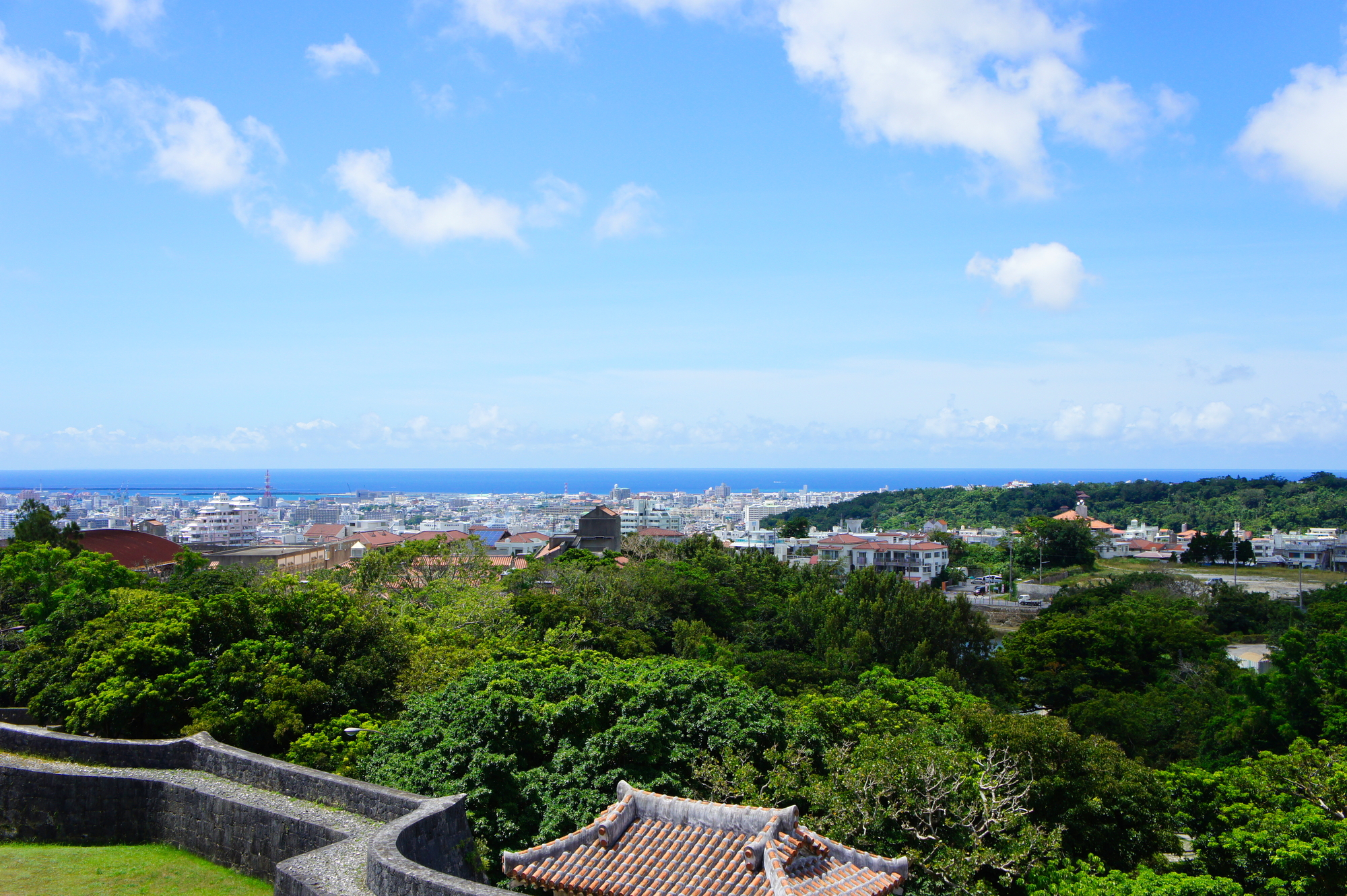
Naha City
- Naha City: The prefectural capital and central city where “Naha Airport,” the gateway to the sky, is located. Population approx. 310,000.
- Okinawa City: A cultural city full of exotic atmosphere.
- Ishigaki Island: The center of the Yaeyama Islands.
- Miyako Island: Attractive for its incredibly clear sea called “Miyako Blue.”
Access Information and Estimated Costs
Access to Okinawa is basically limited to “flights.” The Shinkansen does not run there, and ferries are only long-distance routes from Kagoshima, which are not suitable for general sightseeing.
| From | Method | Travel Time | Estimated Cost (One Way) |
|---|---|---|---|
| Tokyo (Haneda/Narita) | Flight | Approx. 2h 45m | ¥15,000–¥50,000 |
| Osaka (Itami/Kansai) | Flight | Approx. 2h 15m | ¥10,000–¥40,000 |
| Tokyo | Shinkansen | × Not Available | – |
| Kagoshima | Ferry | Approx. 25h | ¥15,000–¥30,000 |
Annual Event Calendar
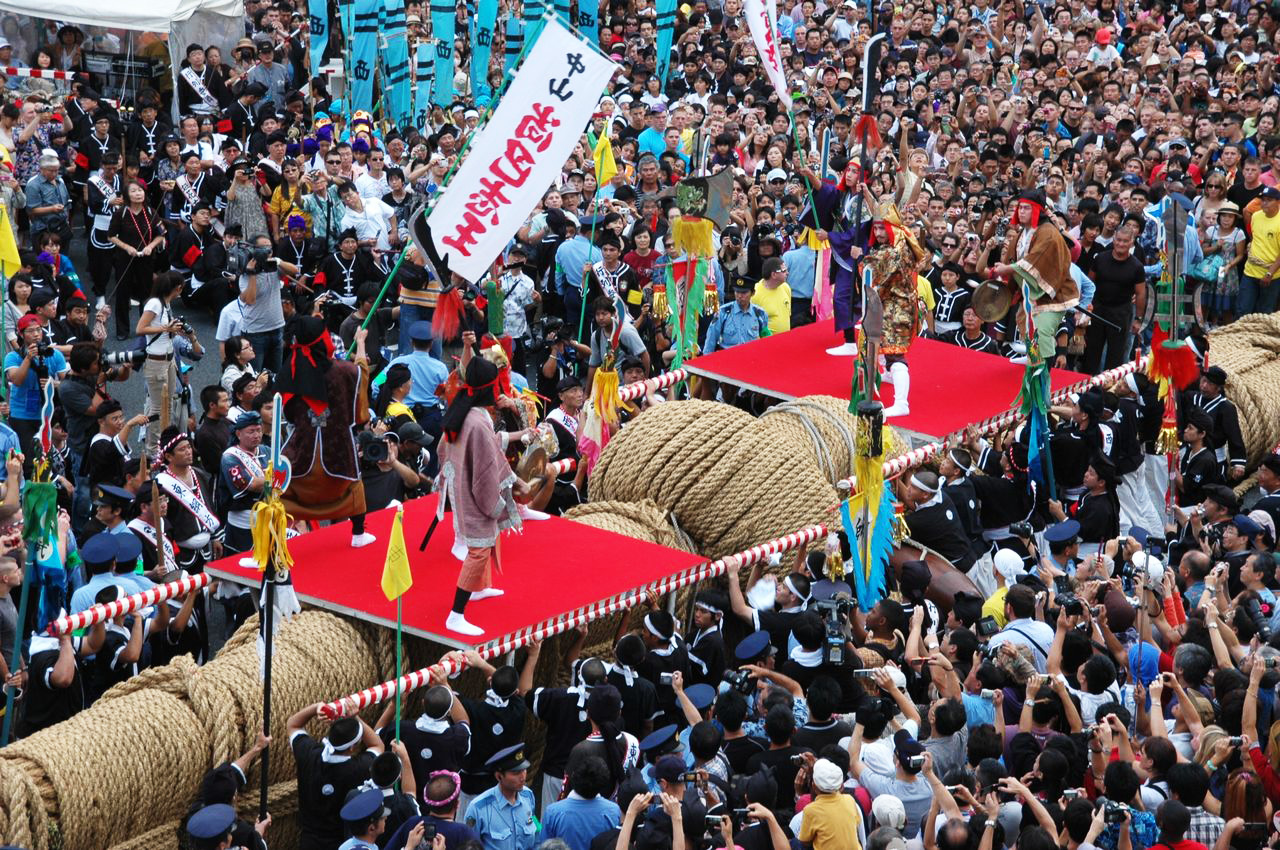
Naha Great Tug-of-war Festival
© Naha City
- Late Jan: Japan’s earliest Cherry Blossom Festival (Kanhizakura)
- April: Beach Opening (various beaches)
- May: Naha Hari (Dragon Boat Race)
- August: All-Island Eisa Festival (Traditional Dance)
- October: Naha Great Tug-of-war Festival
Must-Eat Gourmet & Classic Souvenirs
🍽 Local Gourmet
- Okinawa Soba (Soki Soba)
- Goya Champuru (Bitter Melon Stir-fry)
- Agu Pork Shabu-shabu
- Taco Rice
🎁 Classic Souvenirs
- Chinsuko (Cookies)
- Beni-imo Tart (Purple Yam Tart)
- Ryukyu Glass
- Awamori (Aged Sake / Kusu)
2. 10 Must-Visit Sightseeing Spots in Okinawa
We have selected the royal road spots that you absolutely cannot miss on your first trip to Okinawa.
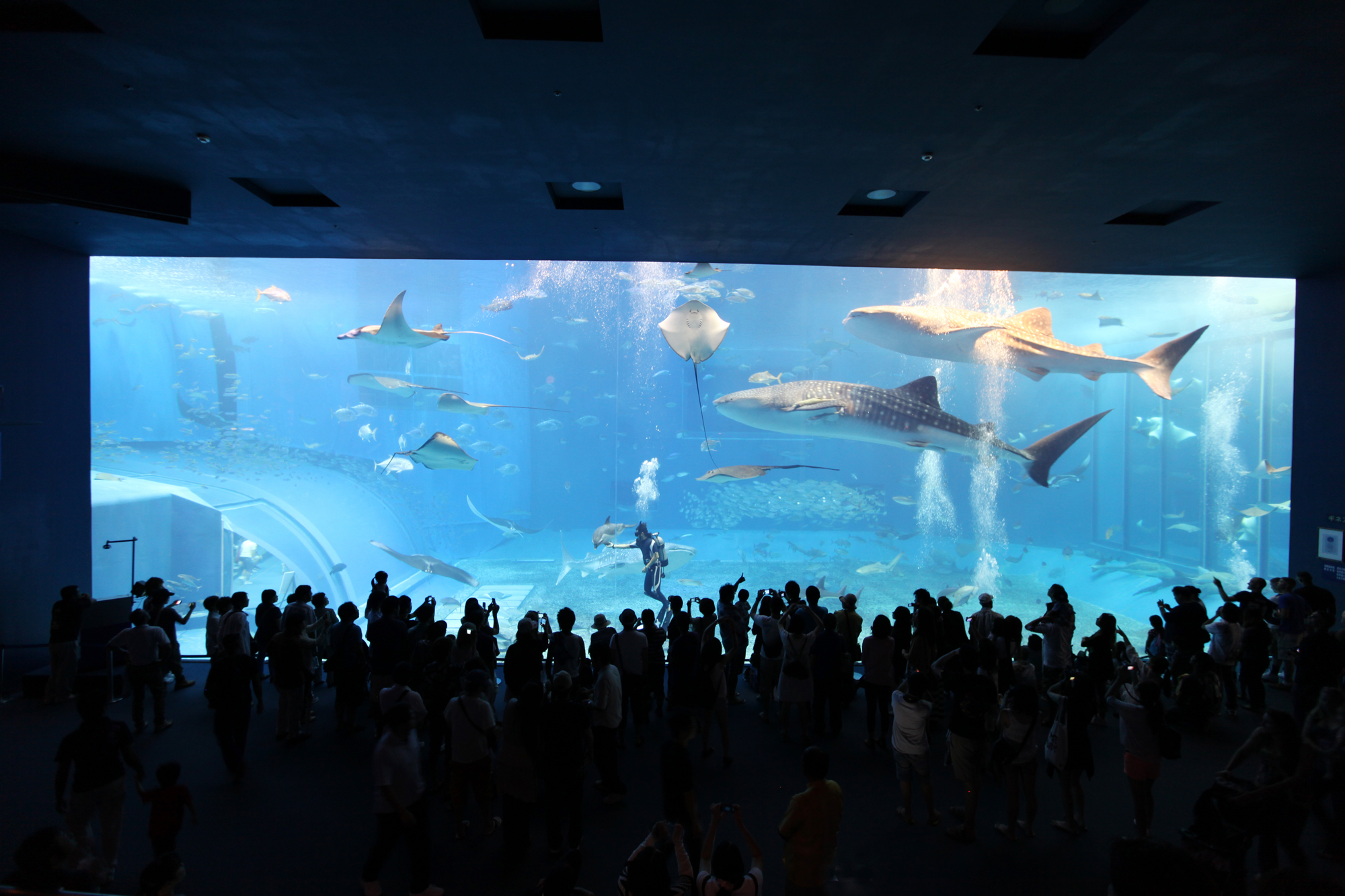
- Okinawa Churaumi Aquarium: The whale sharks swimming in one of the world’s largest tanks are breathtaking.
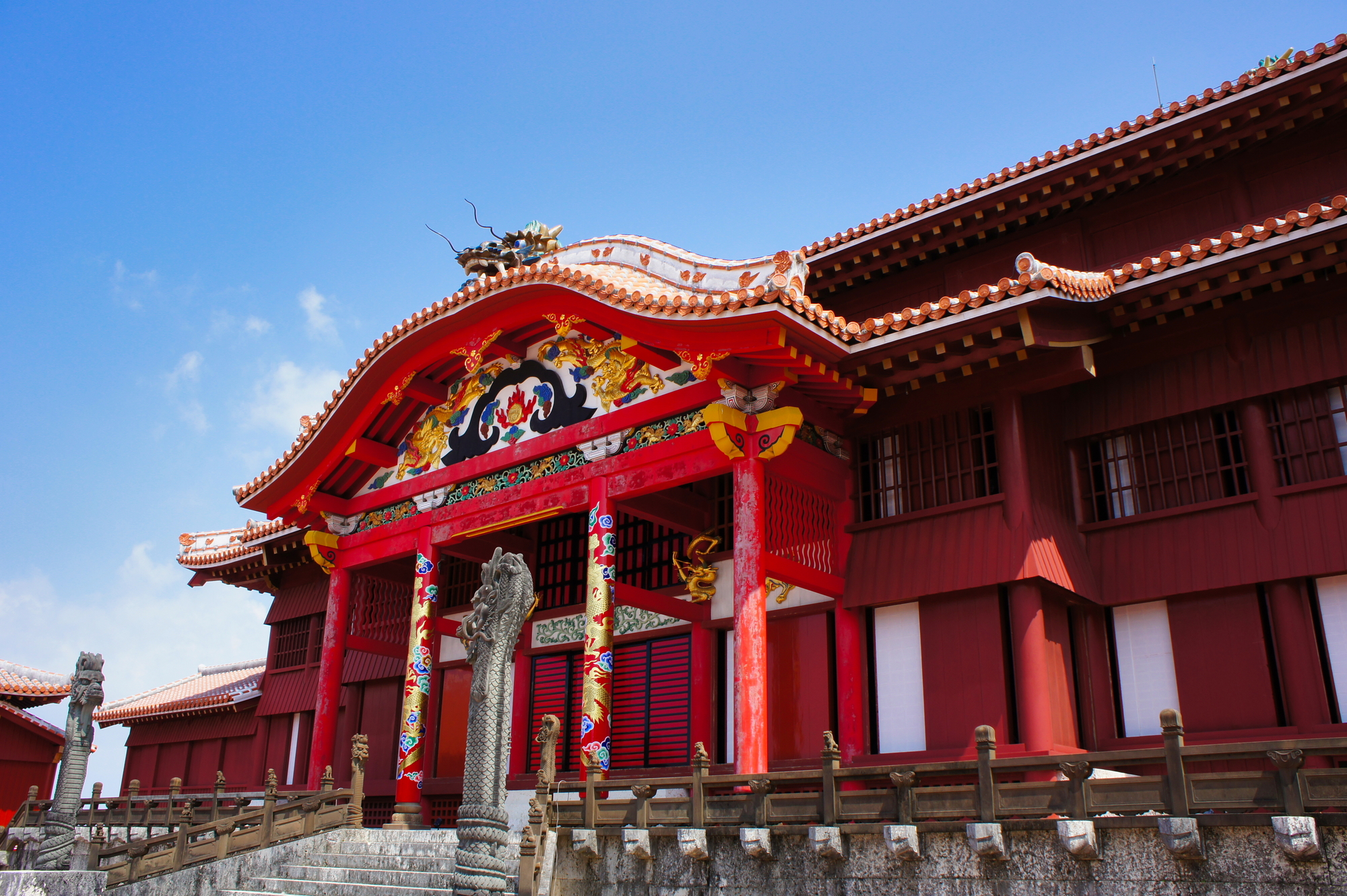
- Shuri Castle Park: A World Heritage site conveying the glory of the Ryukyu Kingdom (*Tour available during main hall reconstruction. Restoration scheduled for autumn 2026).
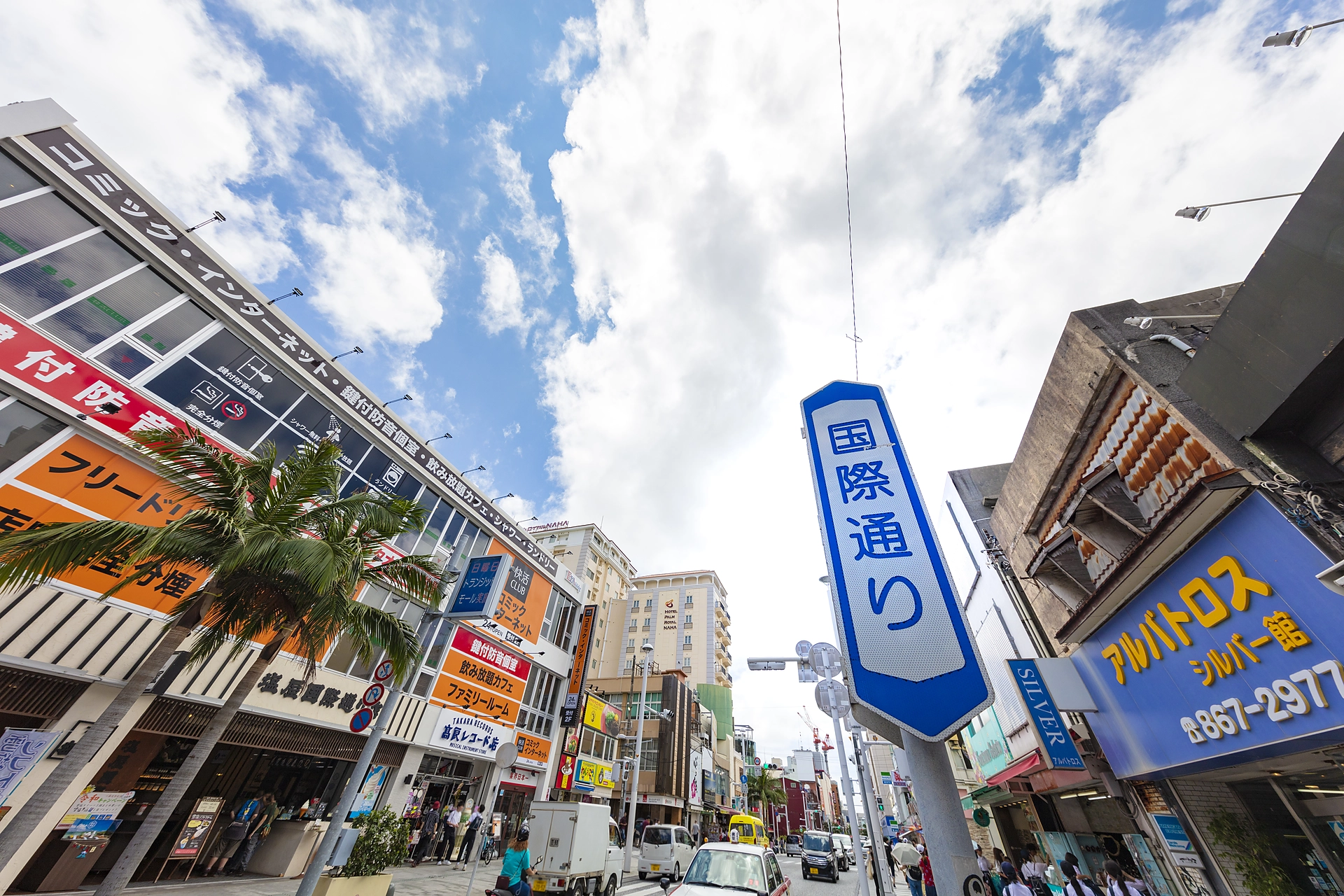
- Kokusai Street: Naha’s main street where souvenir shops and gourmet food gather.
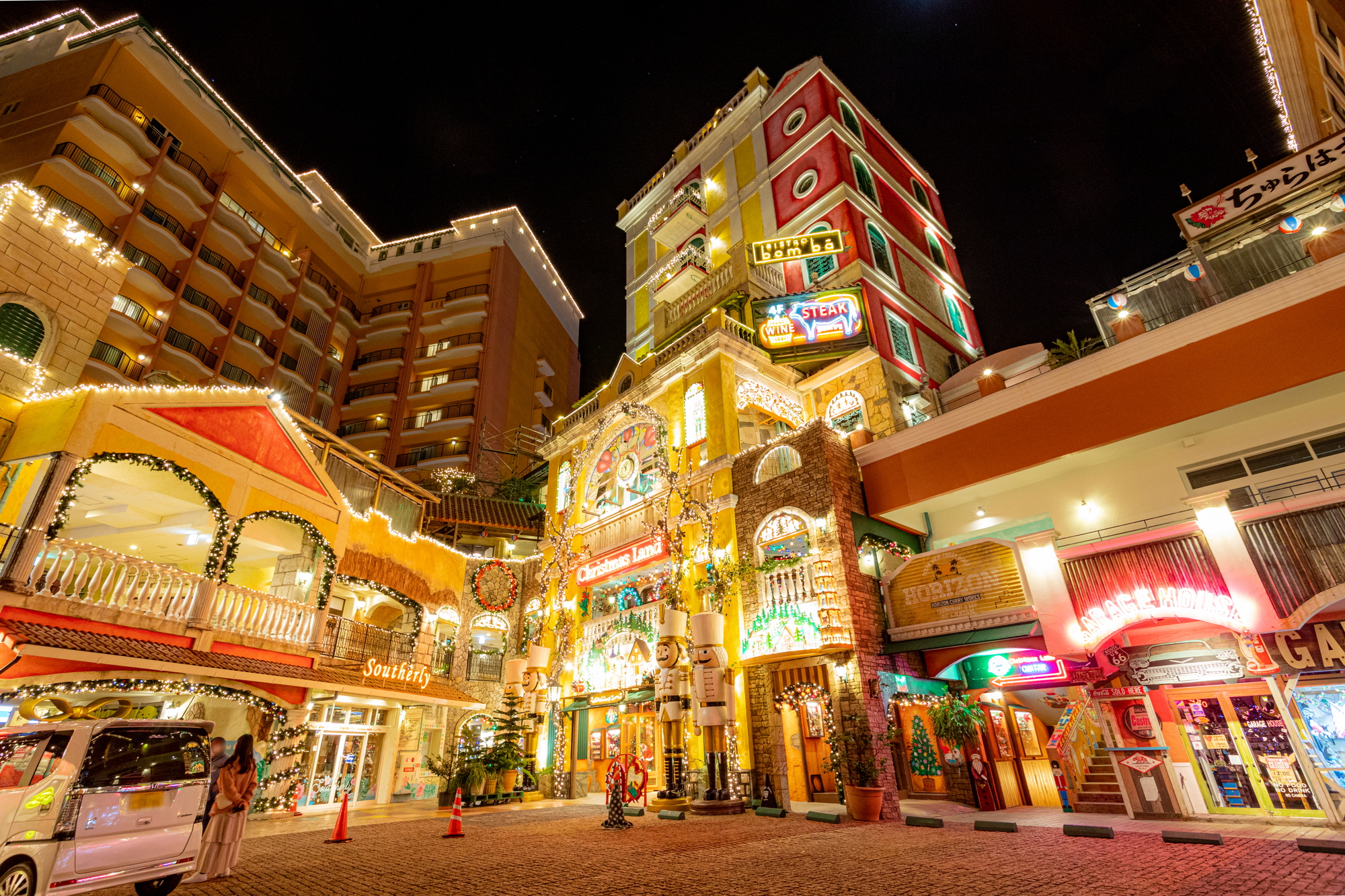
- Mihama American Village: An area with a Ferris wheel and shopping that exudes the atmosphere of the American West Coast.
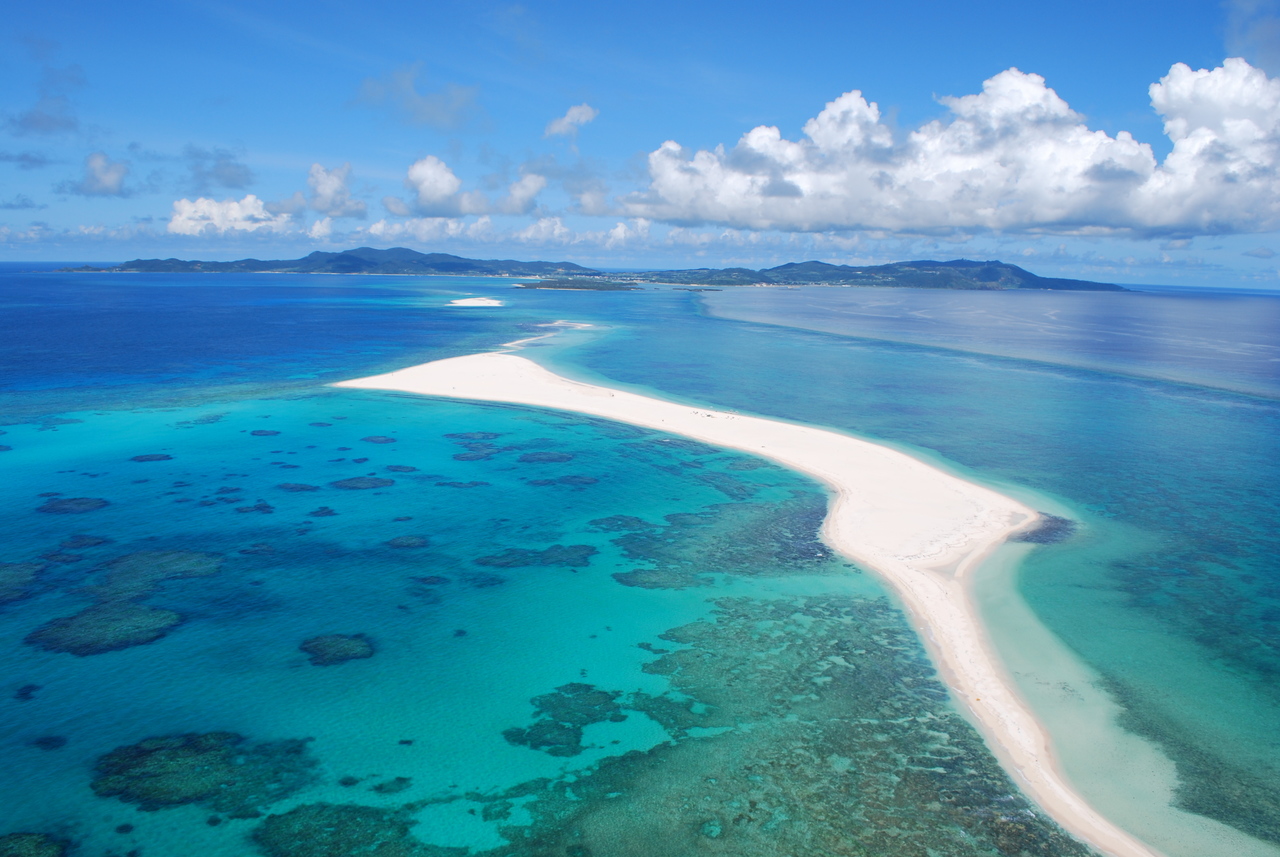
- Kabira Bay (Ishigaki Island): A scenic spot awarded three stars in the Michelin Guide.
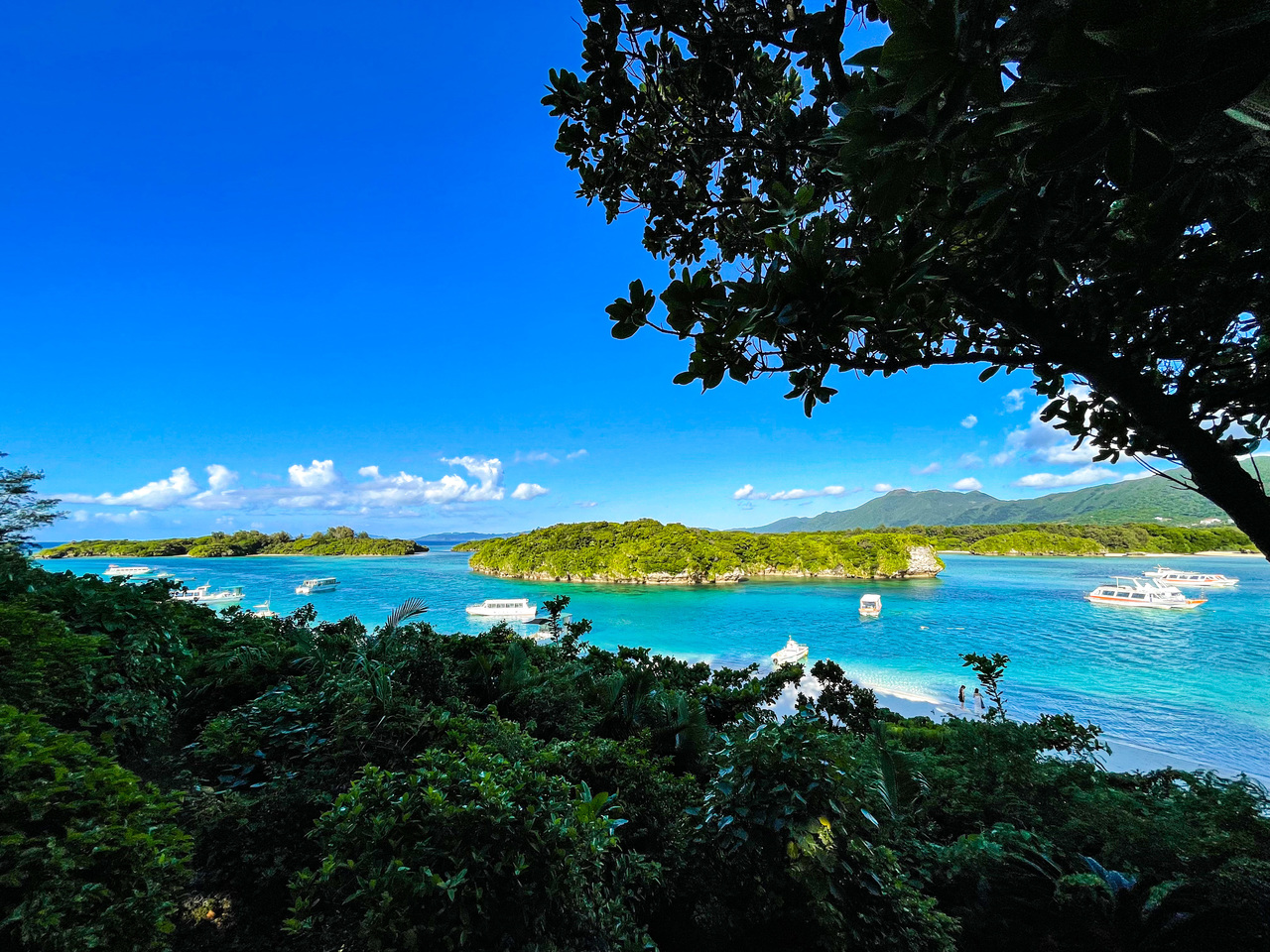
Spectacular view, Kabira Bay © 9689tatsuya Creative Commons Attribution 4.0 International License
- Sefa Utaki: A power spot considered the most sacred place in the Ryukyu Kingdom (World Heritage).
- Taketomi Island: Encounter the old-fashioned original scenery of Okinawa with red-tiled roofs and water buffalo cart tours.
- Cape Manzamo: A scenic spot with a cliff shaped like an elephant’s trunk.
- Kouri Island: A remote island accessible by car. The blueness of the sea from “Kouri Bridge” is moving.
- Yonaha Maehama Beach (Miyako Island): A white sand beach on Miyako Island said to be the most beautiful in the East.
🌸 Cherry Blossom Spots (Late Jan – Feb)
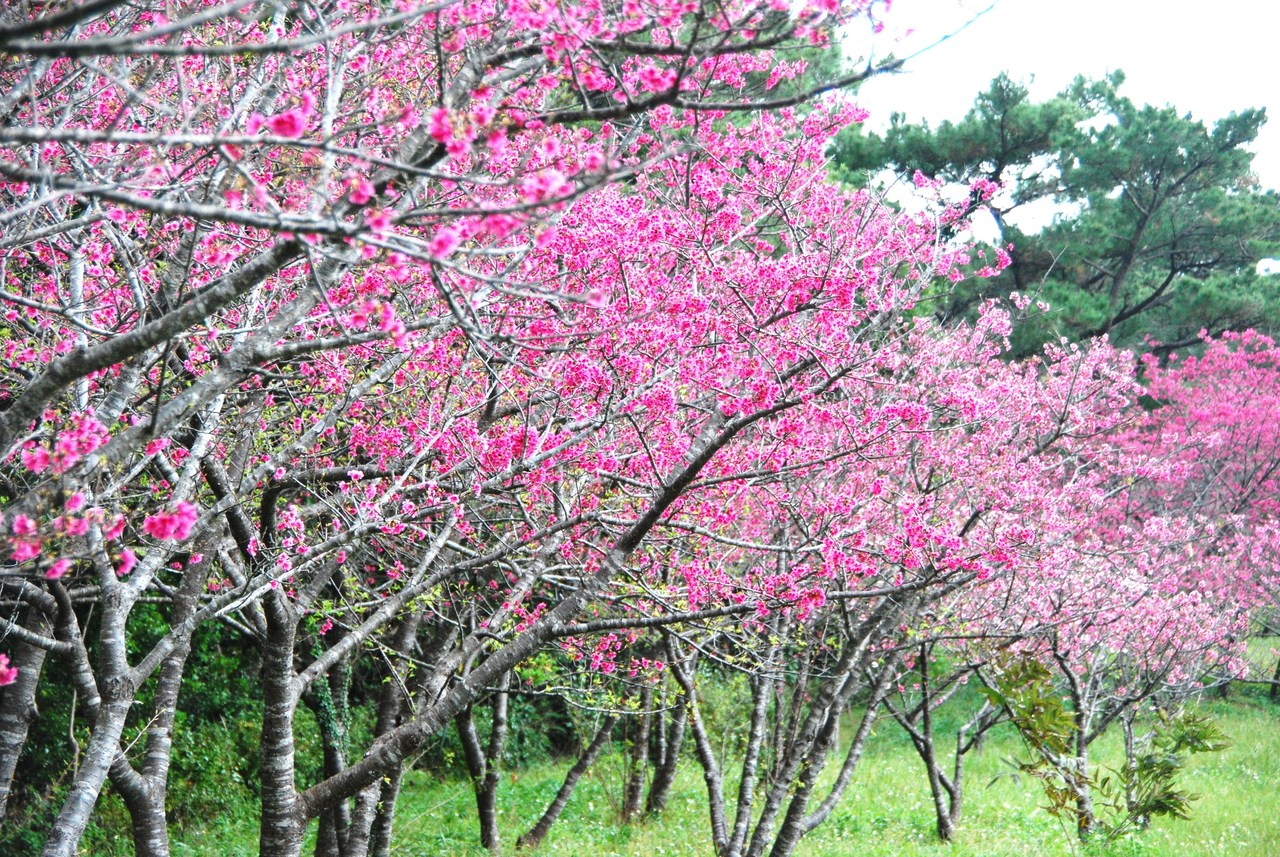
Kumejima – Japan’s earliest cherry blossoms, the impressive pink Kanhizakura © Kumejima93_OKINAWA Creative Commons Attribution 4.0 International License
Okinawa’s cherry blossoms are the dark pink “Kanhizakura” (Taiwan cherry).
- Nakijin Castle Ruins (Collaboration of World Heritage and cherry blossoms)
- Yaedake Sakura-no-Mori Park
- Yogi Park (Naha City)
🍁 About Autumn Leaves
Okinawa does not have autumn foliage like the mainland, but from autumn to winter, some “Ryukyu Hazenoki” (wax trees) turn red, and cosmos flowers bloom in full glory. The charm of Okinawa is that you can enjoy lush green nature even in winter.
3. Healing Spots: 5 Best Hot Springs in Okinawa
You might think “Hot springs in Okinawa?”, but resort hot springs where you can bathe while looking at the sea are actually plentiful.
- Ryukyu Onsen Senagajima Hotel (Ryujin no Yu): Close to Naha Airport, the open-air bath where you can bathe while watching planes take off and land and the sea is very popular.
- Chatan Onsen (Lequ Okinawa): A natural hot spring pumped from 1,400m underground located in the American Village.
- Shigira Golden Onsen (Miyako Island): A golden open-air bath surrounded by jungle-like greenery and flowers.
- Jurassic Onsen (Hotel Orion Motobu): Just near Churaumi Aquarium. A scenic hot spring overlooking Ie Island.
- Yuinchi Hotel Nanjo (Enjin no Yu): Located on the hill of Sashiki, a source-fed hot spring overlooking the sea below.
4. Ryukyu History and Traditional Crafts
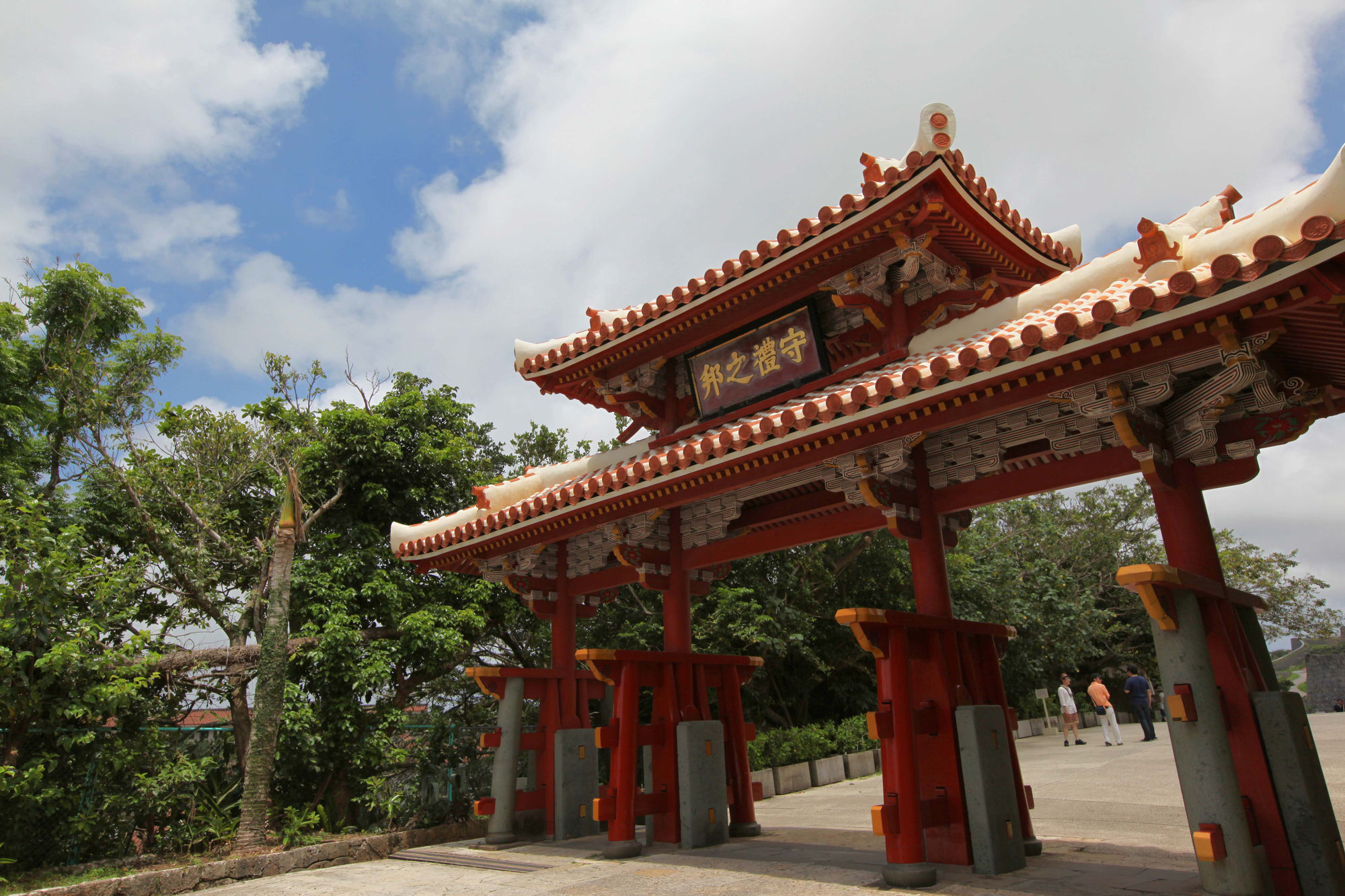
History: The Glory of the Ryukyu Kingdom
Okinawa was once an independent country called the “Ryukyu Kingdom.” It prospered as a hub of trade with China, Japan, and Southeast Asia, cultivating a unique culture called “Champuru Culture.” The “Gusuku Sites and Related Properties of the Kingdom of Ryukyu,” including Shuri Castle, are registered as UNESCO World Heritage Sites.
Traditional Crafts
- Yachimun (Pottery): Characterized by rustic and powerful patterns. “Yachimun no Sato” in Yomitan Village is famous.
- Ryukyu Glass: A glass craft characterized by vivid colors and air bubbles, which started from reusing cola bottles from the US military after the war.
- Bingata: A traditional dyeing technique dyed with vivid colors typical of a southern country.
5. Expert Recommendations: Model Travel Routes
🔰 Royal Course (3 Days, 2 Nights): For First-Timers!
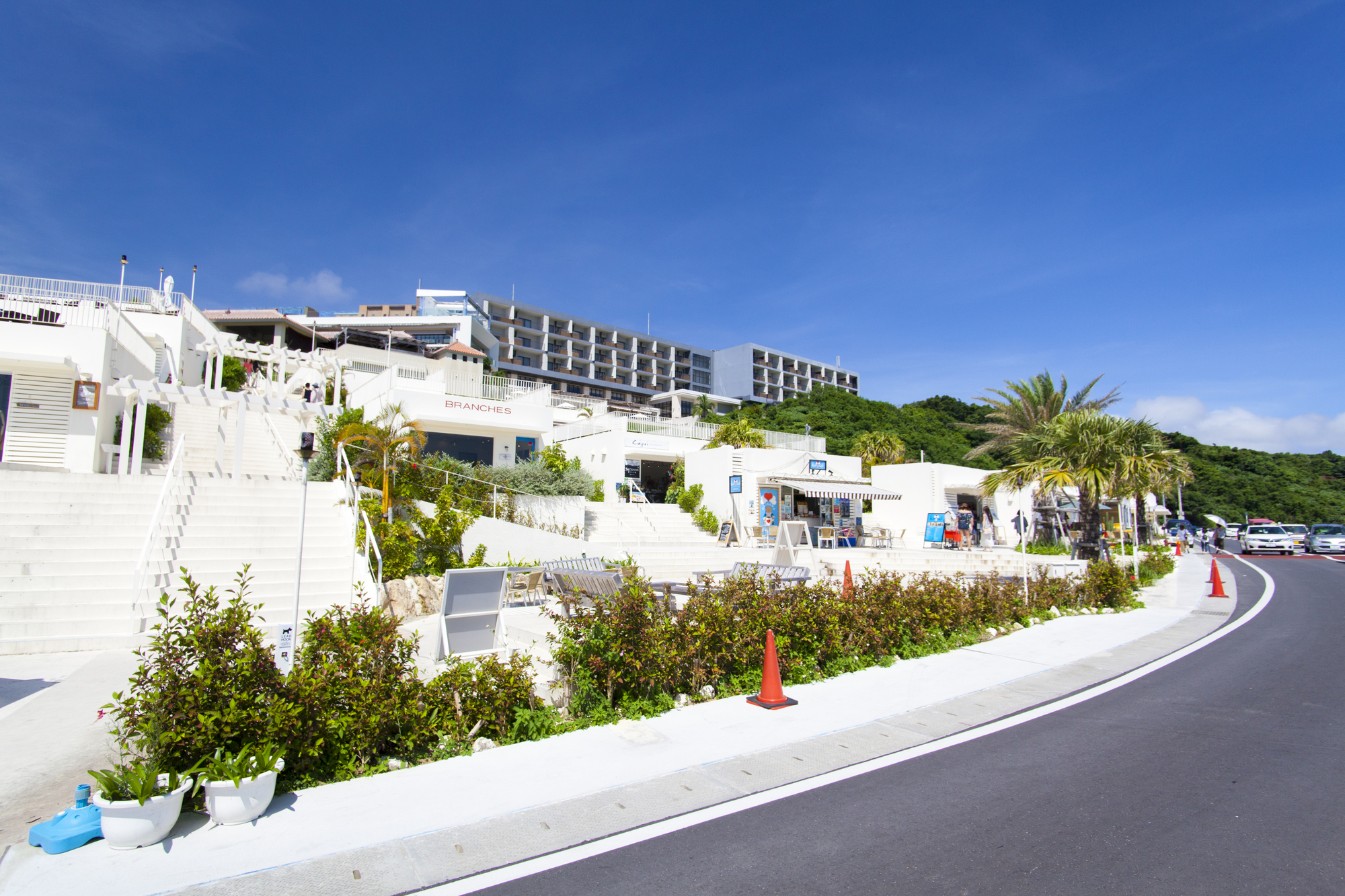
Umikaji Terrace
A plan to efficiently visit major spots centering on Naha and Chatan (Central area).
- Day 1: Arrive at Naha Airport → Lunch & Stroll on Kokusai Street → Shuri Castle Park → Stay in Naha
- Day 2: Drive north with rental car → Cape Manzamo → Okinawa Churaumi Aquarium → Sunset and Dinner at American Village → Stay in Chatan
- Day 3: Cafe hopping in Minatogawa Stateside Town → Umikaji Terrace (Senagajima) → Naha Airport
🏝 Island Hopping Course (4 Days, 3 Nights): To Ishigaki & Yaeyama Islands
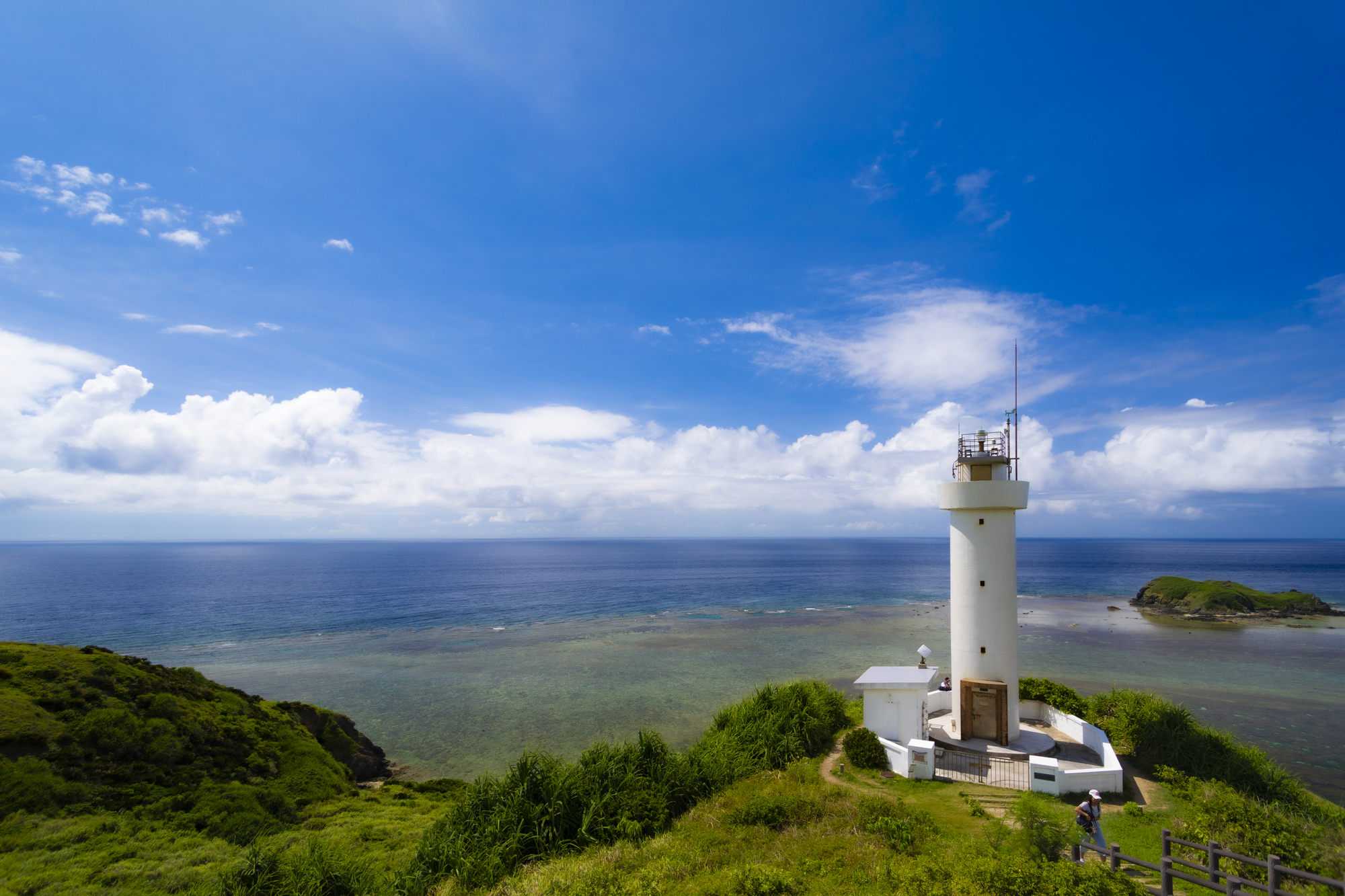
Hirakubozaki Lighthouse
A plan to enjoy a more relaxed island time different from the main island.
- Day 1: Direct flight to Ishigaki Island → Glass boat at Kabira Bay → Ishigaki Beef Yakiniku Dinner
- Day 2: Ferry to Taketomi Island → Water buffalo cart sightseeing and Cycling → Stay in Ishigaki Island
- Day 3: Ferry to Iriomote Island → Activity experience such as Mangrove Cruise → Stay in Ishigaki Island
- Day 4: Buy souvenirs at the Public Market → Ishigaki Airport
🌳 Nature Lovers Course (3 Days, 2 Nights): Explore the Yanbaru Forest
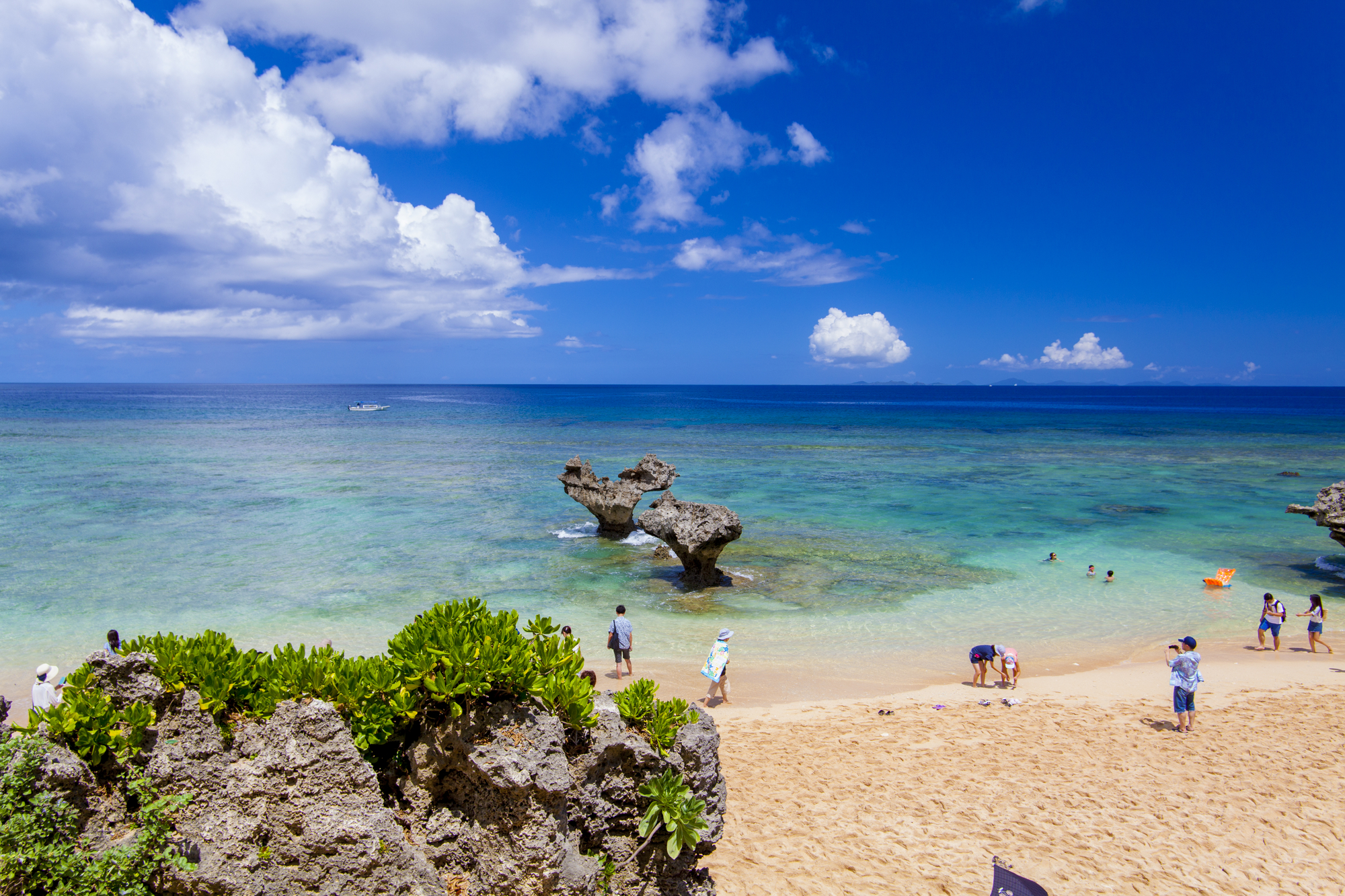
Kouri Island Heart Rock
Aim for the “Yanbaru” area in the northern part of Okinawa Main Island, registered as a World Natural Heritage Site.
- Day 1: Direct from Naha to the North → Drive on Kouri Island → Stay in Motobu Town
- Day 2: Trekking at Daisekirinzan → Hiking at Hiji Otaki Falls → Mangrove Kayak Experience
- Day 3: Churaumi Aquarium → Stroll through Bise Fukugi Tree Road → To Naha Airport
🤿 Activity Experience Course (3 Days, 2 Nights)
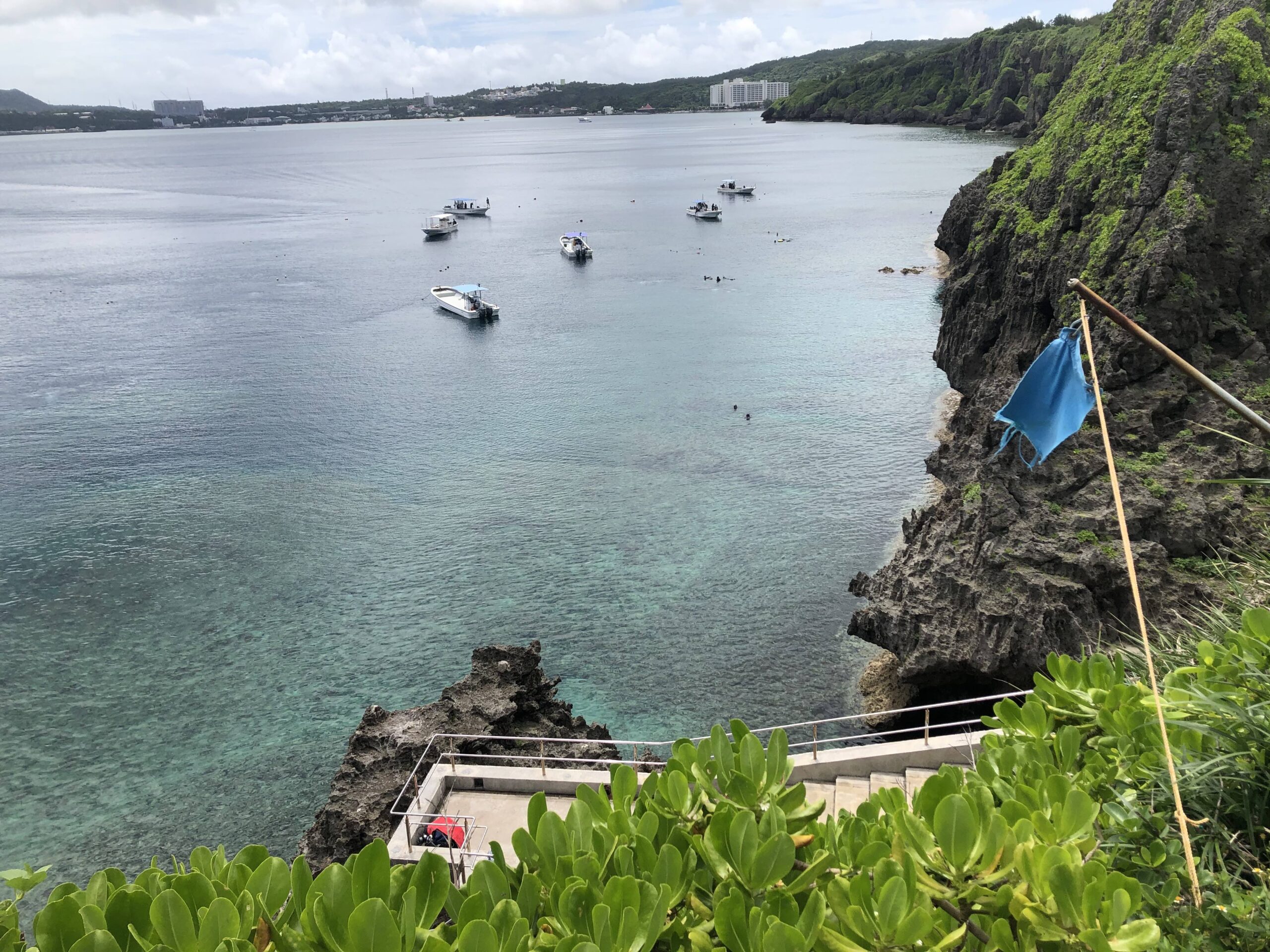
Blue Cave
- Day 1: After arrival, immediate snorkeling experience at “Blue Cave (Onna Village)”
- Day 2: Join a day diving tour to the Kerama Islands (Experience the world-class transparency “Kerama Blue”)
- Day 3: View the sea from the sky with Parasailing → Naha Airport
Frequently Asked Questions (FAQ)
Q. When is the best season to travel to Okinawa?
A. For swimming, late June (after the rainy season) to October is best. If you prioritize sightseeing and comfortable weather, March to April or October to November is recommended.
Q. Is a rental car necessary for Okinawa sightseeing?
A. The Yui Rail (monorail) and taxis are sufficient for Naha City, but a rental car is almost essential if you want to tour the main island spots like Churaumi Aquarium and seaside cafes.
Q. Are there hot springs in Okinawa?
A. Yes, there are. Although volcanic hot springs are few, there are plenty of natural hot springs within resort hotels and spa facilities utilizing deep sea water.