Hi, I’m Hiro, a travel professional (Certified Domestic Travel Service Supervisor). The “Chugoku Region” is located at the western end of Honshu. This area is packed with world-class scenery and history, including World Heritage sites like Itsukushima Shrine (Miyajima) and the Atomic Bomb Dome, the ultimate matchmaking spot Izumo Taisha, and the massive Tottori Sand Dunes.
It is characterized by having two completely different faces: the mild climate of the Seto Inland Sea side (Sanyo) and the mystical atmosphere of the Sea of Japan side (San’in). I will provide a complete guide to resolve questions like “What is the right way to tour San’in and Sanyo?” or “What about transportation?” and to tour this charming area “efficiently and movingly.”
Table of Contents
1. Basic Information about Chugoku Region
Geography and Climate
The Chugoku region is divided by the Chugoku Mountains into “Sanyo (Seto Inland Sea side)” and “San’in (Sea of Japan side).” Sanyo (Okayama, Hiroshima, Southern Yamaguchi) is sunny and warm throughout the year, while San’in (Tottori, Shimane, Northern Yamaguchi) has a lot of snow in winter and high humidity. This difference in climate creates a rich variety of food cultures.
Average Temperature and Precipitation (Hiroshima)
Here is the annual data for Hiroshima, the largest city in the Chugoku region. If you go to the San’in side (Tottori/Shimane), please assume that snow protection is necessary in winter and the temperature will be 2°C to 3°C lower than this.
| Month | Avg. Temp (°C) | Precipitation (mm) | Clothing Guide |
|---|---|---|---|
| Jan | 5.2 | 44 | Coat, scarf (Boots essential for San’in) |
| Apr | 14.7 | 125 | Jacket or cardigan |
| Jul | 27.1 | 239 | Short sleeves, sunglasses |
| Oct | 18.5 | 103 | Long-sleeved shirt, light outerwear |
Key Facts
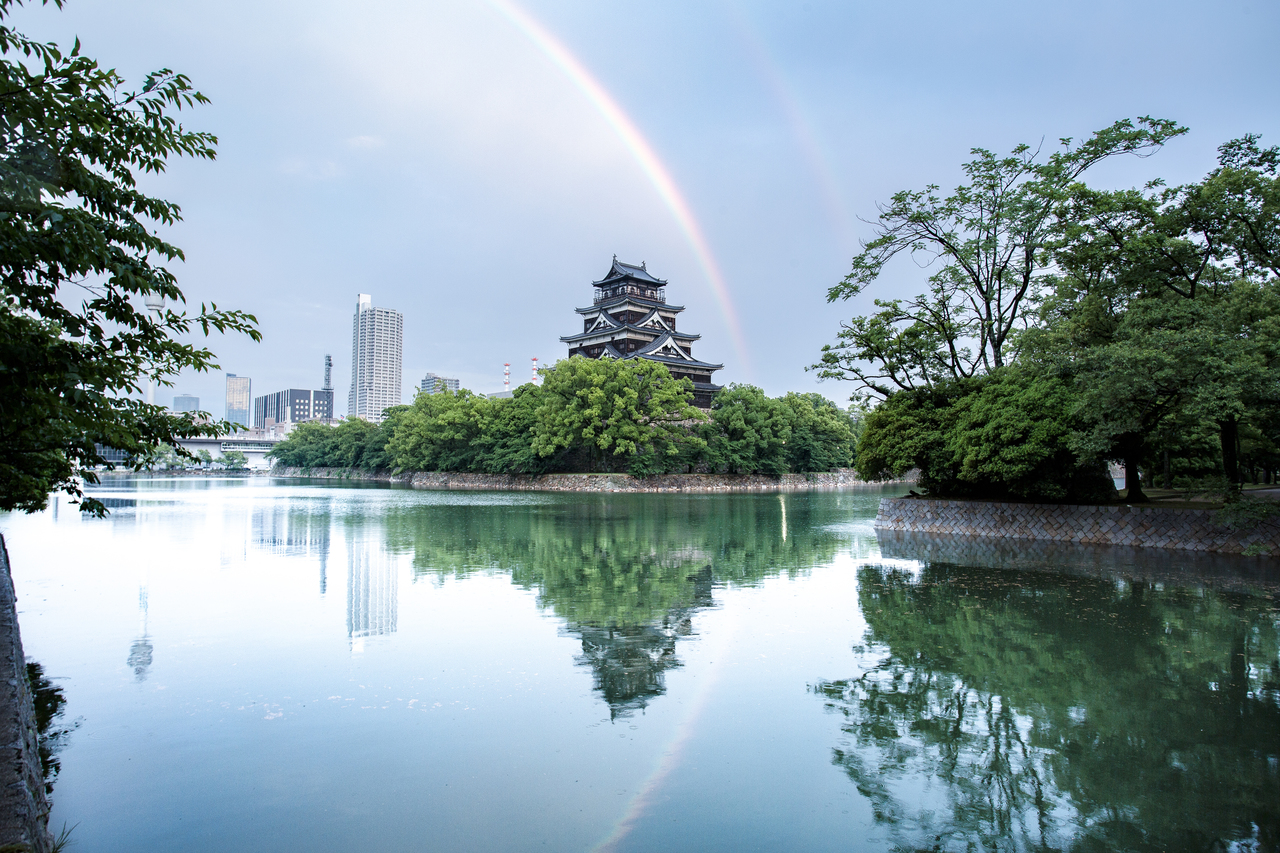
Rainbow over Hiroshima Castle © Tomato_249 Creative Commons Attribution 4.0 International License
- Population: Approx. 7.2 million (Major cities: Hiroshima ~1.19 million, Okayama ~720k)
- Major Airports: Hiroshima Airport (HIJ), Okayama Momotaro Airport (OKJ), Izumo Enmusubi Airport (IZO), Yonago Kitaro Airport (YGJ)
Access Information and Estimated Costs
The Shinkansen is convenient for the Sanyo side, but flights or limited express trains (via Okayama) are generally used for access to the San’in side (Izumo/Tottori).
| From | To | Method | Travel Time | Estimated Cost (One Way) |
|---|---|---|---|---|
| Tokyo Station | Hiroshima | Tokaido/Sanyo Shinkansen | Approx. 4h | ¥19,440 (Nozomi Reserved) |
| Tokyo (Haneda) | Izumo/Hiroshima/Okayama | Flight | Approx. 1h 30m | ¥10,000–¥35,000 |
| Shin-Osaka Station | Okayama | Sanyo Shinkansen | Approx. 45m | ¥6,350 |
| Matsuyama Port | Hiroshima Port | Super Jet (High-speed boat) | Approx. 1h 10m | ¥7,800 |
For international visitors, the JR West “Sanyo-San’in Area Pass” is the best. It covers a wide range, including not only the Shinkansen but also limited express trains like “Yakumo (Okayama to Izumo)”. Domestic travelers can also use discount tickets like “Baritoku Kodama” to save significantly on Shinkansen travel.
2. 10 Must-Visit Sightseeing Spots in Chugoku
Prayers for peace, the world of mythology, and the beauty of natural formations. Here are the highlights of the Chugoku region.
- Itsukushima Shrine & Miyajima (Hiroshima): A World Heritage site iconic for its Great Torii gate floating in the sea. At low tide, you can walk right up to the base of the torii. Wild deer will also welcome you.
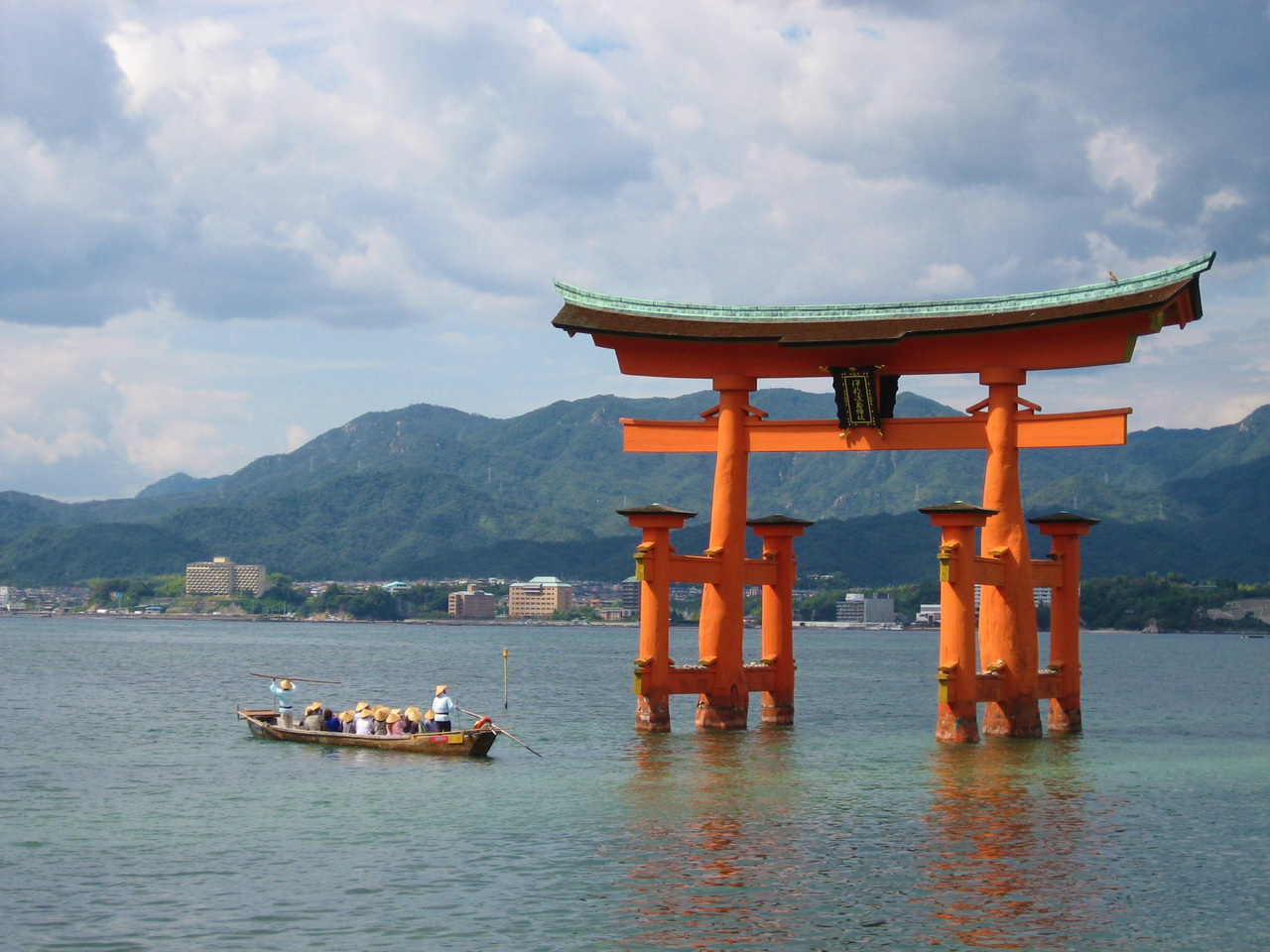
The vermilion Great Torii floating at Miyajima © daisymind Creative Commons Attribution 4.0 International License
- Atomic Bomb Dome & Peace Memorial Park (Hiroshima): A World Heritage site that conveys the tragedy of the first atomic bomb in human history to the present day. A place to visit along with the museum to offer prayers for peace.
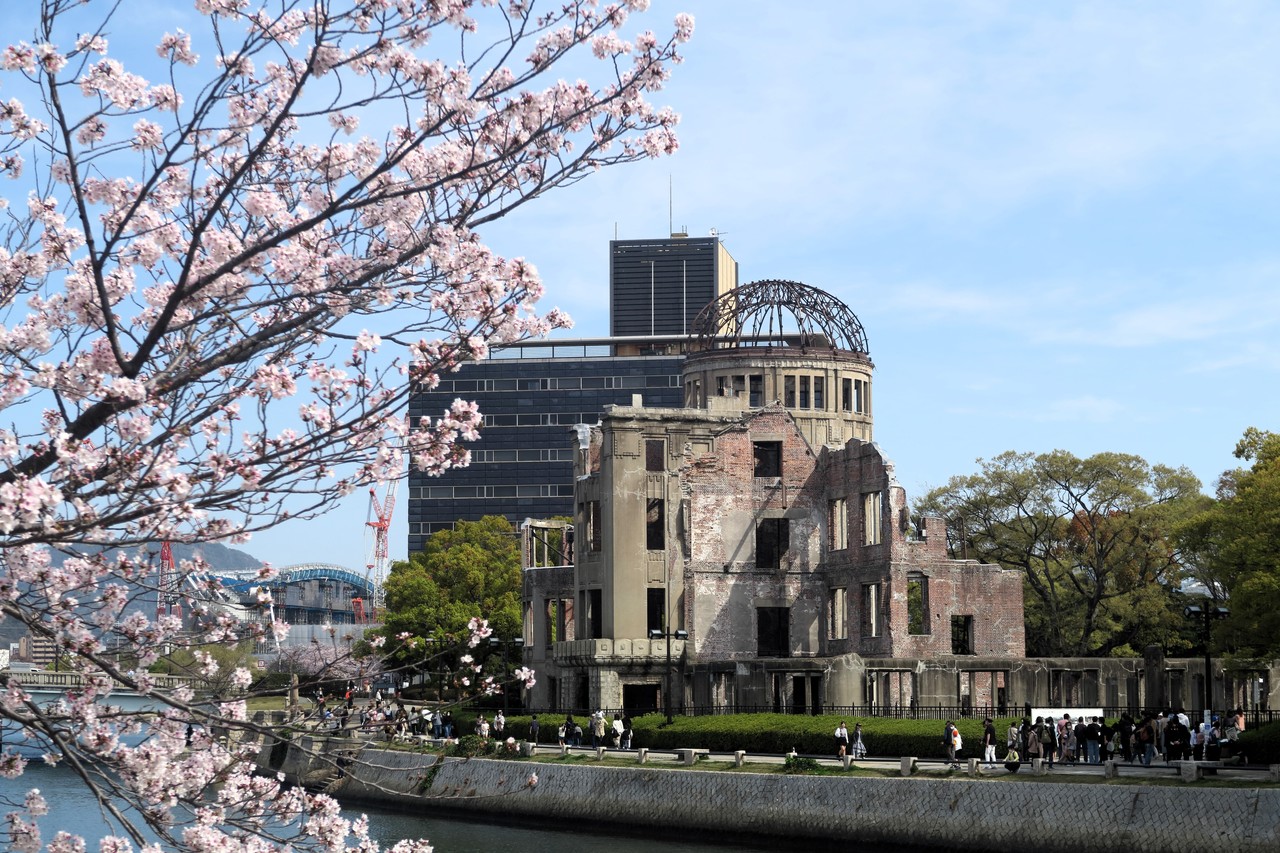
Spring at the Atomic Bomb Dome © Kodai_Miyazaki Creative Commons Attribution 4.0 International License
- Izumo Taisha (Shimane): Japan’s strongest matchmaking spot, where gods from all over the country are said to gather in the 10th month of the lunar calendar (Kannazuki). The huge “shimenawa” (sacred straw rope) is breathtaking.
- Tottori Sand Dunes (Tottori): One of Japan’s largest coastal sand dunes. Riding camels, paragliding, and enjoying exotic scenery.
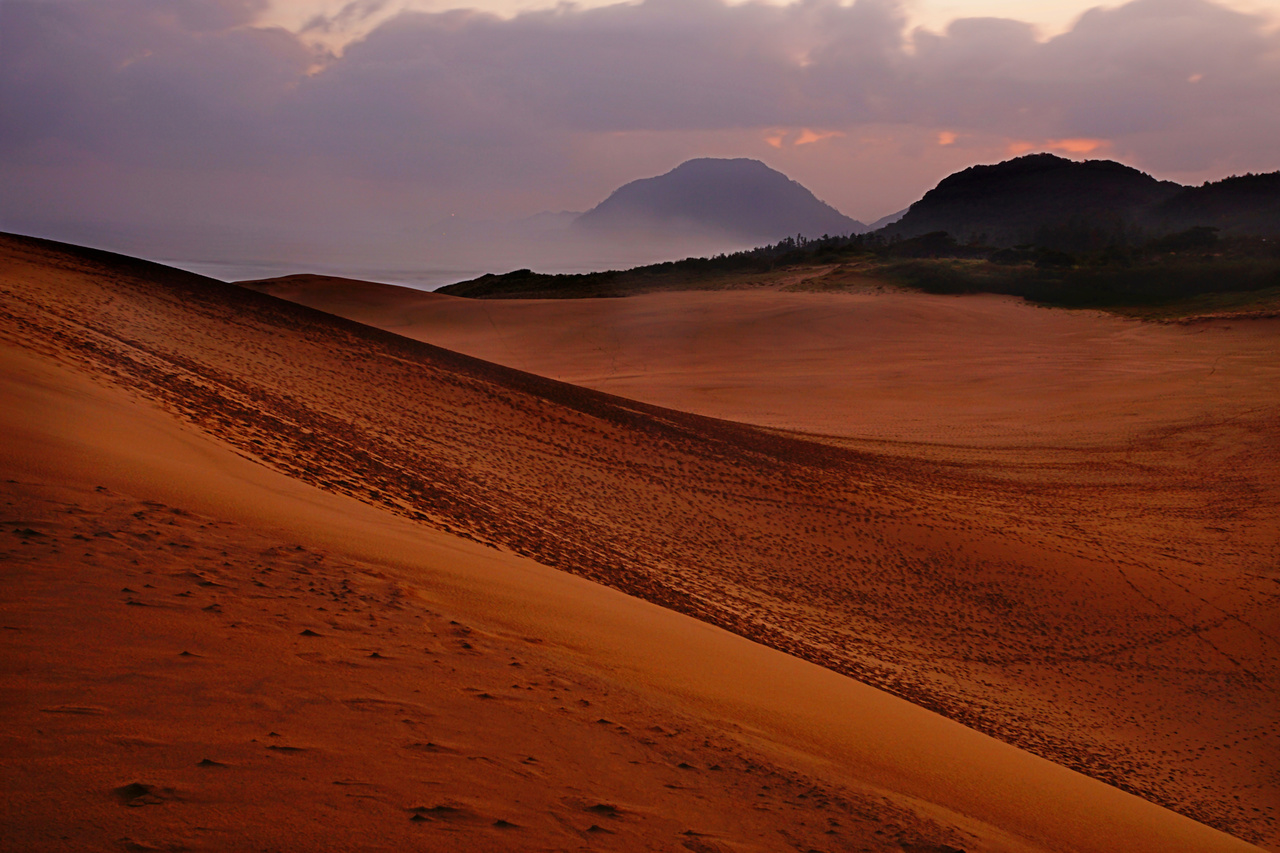
Tottori Sand Dunes on a morning after rain © rikky_photography Creative Commons Attribution 4.0 International License
- Adachi Museum of Art (Shimane): A museum with the “world’s best Japanese garden,” chosen as No. 1 for many consecutive years by a specialized American journal on Japanese gardens.
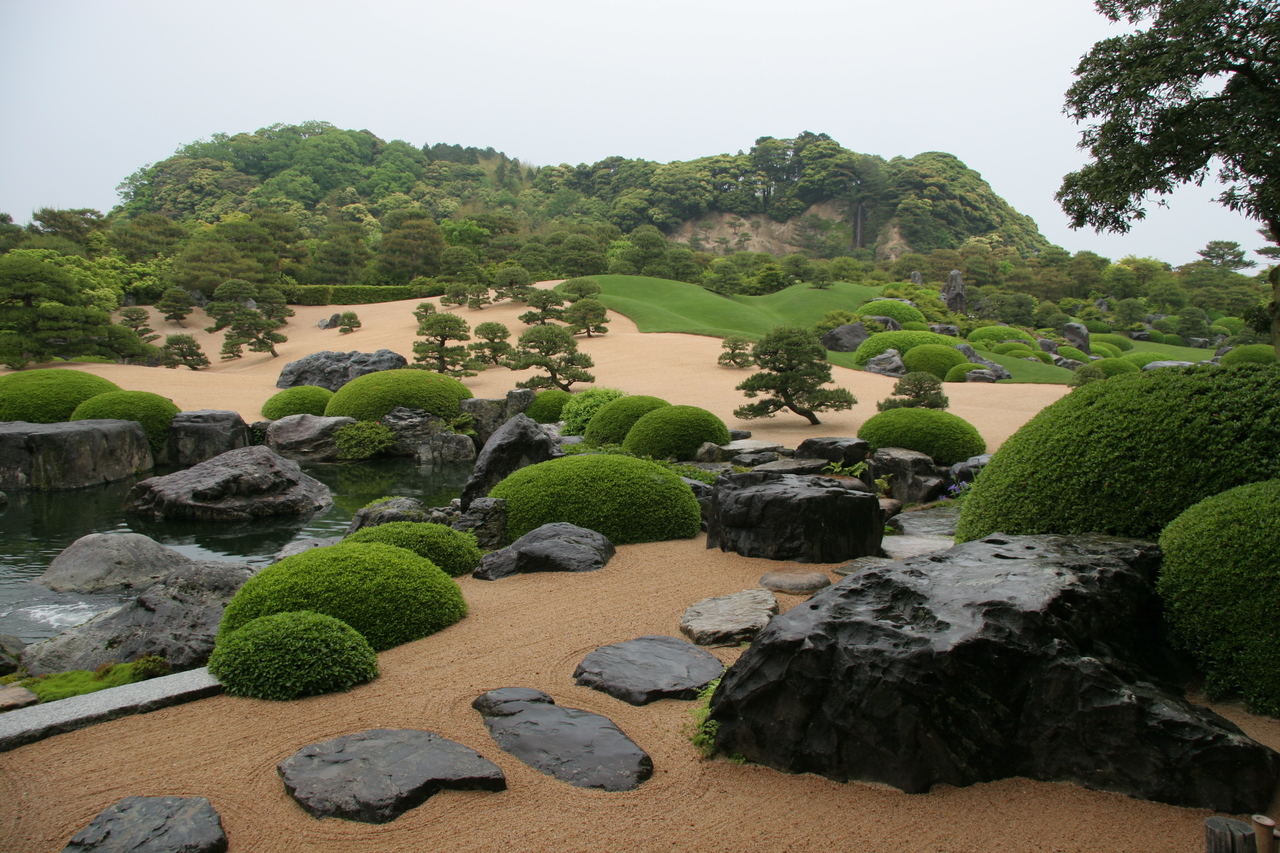
Japanese Garden at Adachi Museum of Art, Shimane © T-KIMURA Creative Commons Attribution 4.0 International License
- Kurashiki Bikan Historical Quarter (Okayama): A beautiful townscape where white-walled storehouses and willow trees reflect in the Kurashiki River. Visiting the Ohara Museum of Art and stylish cafes is popular.
- Akiyoshido Cave & Akiyoshidai (Yamaguchi): One of Japan’s largest limestone caves and a karst plateau where white rocks look like a flock of sheep. A set of spectacular views underground and above ground.
- Motonosumi Shrine (Yamaguchi): A scenic spot where 123 red torii gates line up towards the blue sea. Selected as one of “Japan’s 31 Most Beautiful Places” by CNN.
- Kintaikyo Bridge (Yamaguchi): A wooden bridge with five beautiful arches. The scenery of cherry blossoms in spring and autumn leaves in fall is magnificent.
- Mizuki Shigeru Road (Tottori): The hometown of the author of “GeGeGe no Kitaro.” A street lined with 177 bronze statues of yokai (monsters), irresistible for yokai fans.
Seasonal Highlights
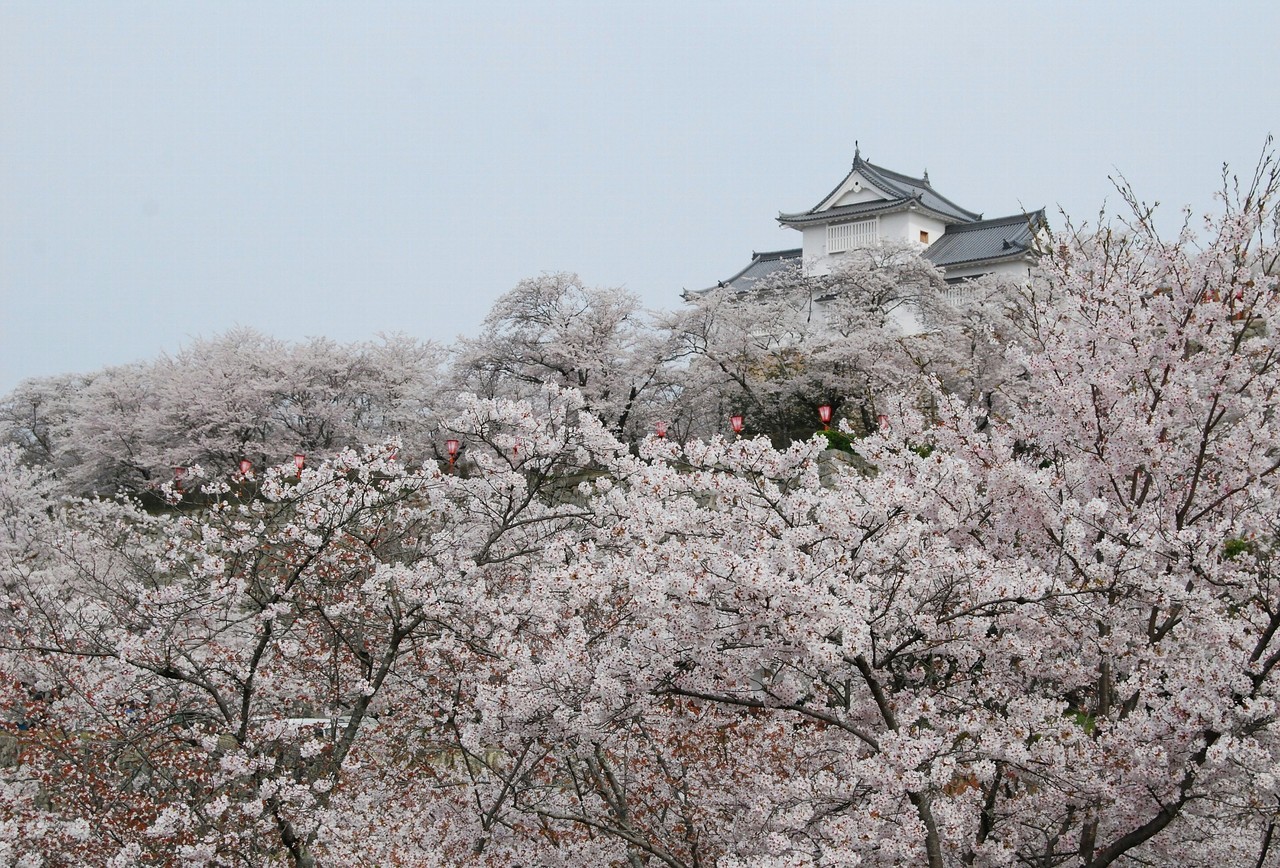
Cherry blossoms at Tsuyama Castle Ruins (Kakuzan Park) © toppo Creative Commons Attribution 4.0 International License
- Cherry Blossoms: Tsuyama Castle (Okayama), Senkoji Park (Onomichi, Hiroshima), Kintaikyo Bridge (Yamaguchi) *Best time: Late Mar to Early Apr
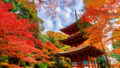
- Autumn Leaves: Miyajima Momijidani Park (Hiroshima), Mt. Daisen (Tottori), Gakuenji Temple (Shimane) *Best time: Mid-Nov to Late Nov
Event Calendar
- May: Hiroshima Flower Festival (Hiroshima)
- August: Okayama Momotaro Festival (Okayama), Miyajima Water Fireworks Festival (Hiroshima – Schedule varies, please check)
- November: Kamiarizuki Festival (Izumo Taisha, Shimane *10th month of lunar calendar) – Sacred period when gods gather from all over the country
Must-Try Gourmet & Souvenirs
- Gourmet: Okonomiyaki/Oysters (Hiroshima), Izumo Soba (Shimane), Crab/Pears (Tottori), Pufferfish (Yamaguchi), Fruit Parfaits (Okayama)
- Souvenirs: Momiji Manju (Hiroshima), Kibi Dango (Okayama), Inaba no Shiro Usagi (Tottori), Dassai (Sake/Yamaguchi)
3. Baths of Myth and Beauty: Top 5 Onsen Areas
Many famous hot springs have flourished as therapeutic baths since ancient times and are known for their high skin-beautifying effects.
| Onsen Area | Features |
|---|---|
| Tamatsukuri Onsen (Shimane) | Japan’s oldest “skin-beautifying bath,” said to make skin beautiful after one dip and cure all diseases after two. Ideal base for sightseeing in Izumo Taisha. |
| Kaike Onsen (Tottori) | A seaside hot spring area facing the Sea of Japan. You can enjoy swimming in the sea in summer, and Matsuba crab dishes in winter are exquisite. |
| Misasa Onsen (Tottori) | A radioactive spring boasting one of the world’s highest radon contents. Famous as a therapeutic bath where you can “soak, drink, and inhale.” |
| Nagato Yumoto Onsen (Yamaguchi) | A hot topic for its stylishly renovated hot spring town along the river. An area attracting attention with the advancement of Hoshino Resorts. |
| Yuda Onsen (Yamaguchi) | A hot spring with a legend that it was found by a white fox. Located in the city with good access, and there are plenty of footbaths scattered around. |
4. Essential History and Traditional Crafts
History and Historical Sites
The Chugoku region retains strong historical colors of both the San’in region, the stage of Japanese mythology, and the Sanyo region, which is deeply involved in modern Japanese history.
- Iwami Ginzan Silver Mine (Shimane): One of the world’s leading silver mines that flourished from the Sengoku period to the Edo period. A World Heritage site. You can visit the mine shafts (mabu) of that time.
- Shokasonjuku (Hagi, Yamaguchi): A private school of Yoshida Shoin that raised patriots of the Meiji Restoration (Ito Hirobumi, Takasugi Shinsaku, etc.). Part of the World Heritage “Sites of Japan’s Meiji Industrial Revolution.”
- Kibitsu Shrine (Okayama): The shrine that became the model for the legend of Momotaro. The National Treasure main hall and the beautiful corridor totaling about 400m are highlights.
Traditional Crafts
- Bizen Ware (Okayama): One of Japan’s Six Ancient Kilns, creating patterns solely through the art of earth and fire without using glaze. Characterized by a simple yet powerful texture.
- Hagi Ware (Yamaguchi): Pottery loved by tea masters, so much so that it is said “First Raku, Second Hagi, Third Karatsu.” The charm lies in “Hagi’s seven transformations,” where the color changes as it is used.
- Kumano Brushes (Hiroshima): Japan’s leading production area for brushes. Famous not only for calligraphy but also for high-quality makeup brushes adopted by global cosmetic brands.
5. Expert Recommendations: Model Travel Routes
Since it is a long area horizontally, the key is whether to tour Sanyo (south side) and San’in (north side) separately or traverse them.
① Royal Popular Course (3 Days, 2 Nights)
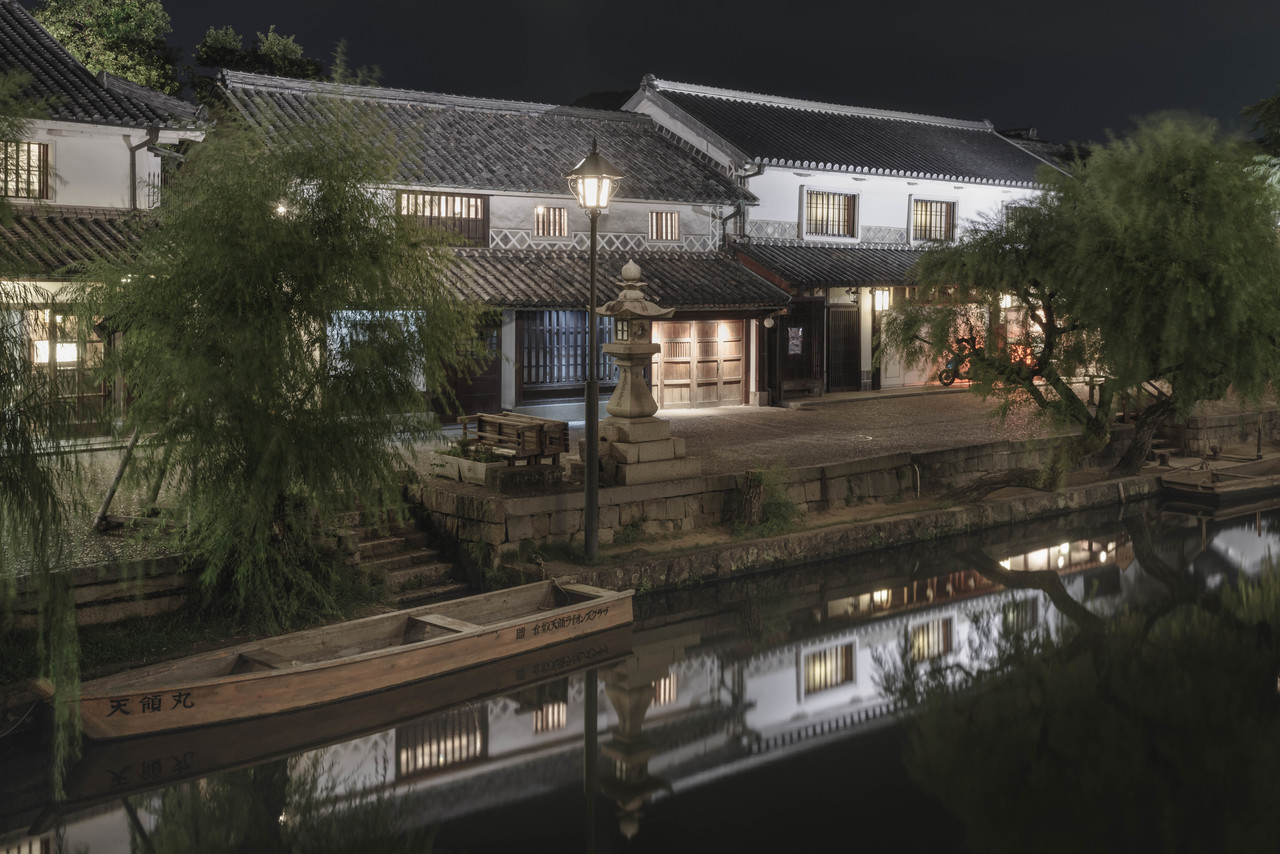
Night view of Kurashiki Bikan Historical Quarter © Yudai_photography Creative Commons Attribution 4.0 International License
Theme: Golden Route! Hiroshima/Miyajima and Okayama/Kurashiki
- Day 1: Arrive Hiroshima Station → Peace Memorial Park & Atomic Bomb Dome → Hiroshima Okonomiyaki Lunch → Ferry to Miyajima → Visit Itsukushima Shrine (Check high/low tide) → Stay in Miyajima (Conger eel rice and grilled oysters)
- Day 2: Return to Hiroshima from Miyajima → Shinkansen to Okayama → Stroll Kurashiki Bikan Historical Quarter (Ohara Museum of Art, River boat ride) → Stay in Okayama or Kurashiki
- Day 3: Korakuen (One of Three Great Gardens) & Okayama Castle → Okayama Fruit Parfait → Return via Shinkansen
② Royal Popular Course (4 Days, 3 Nights)
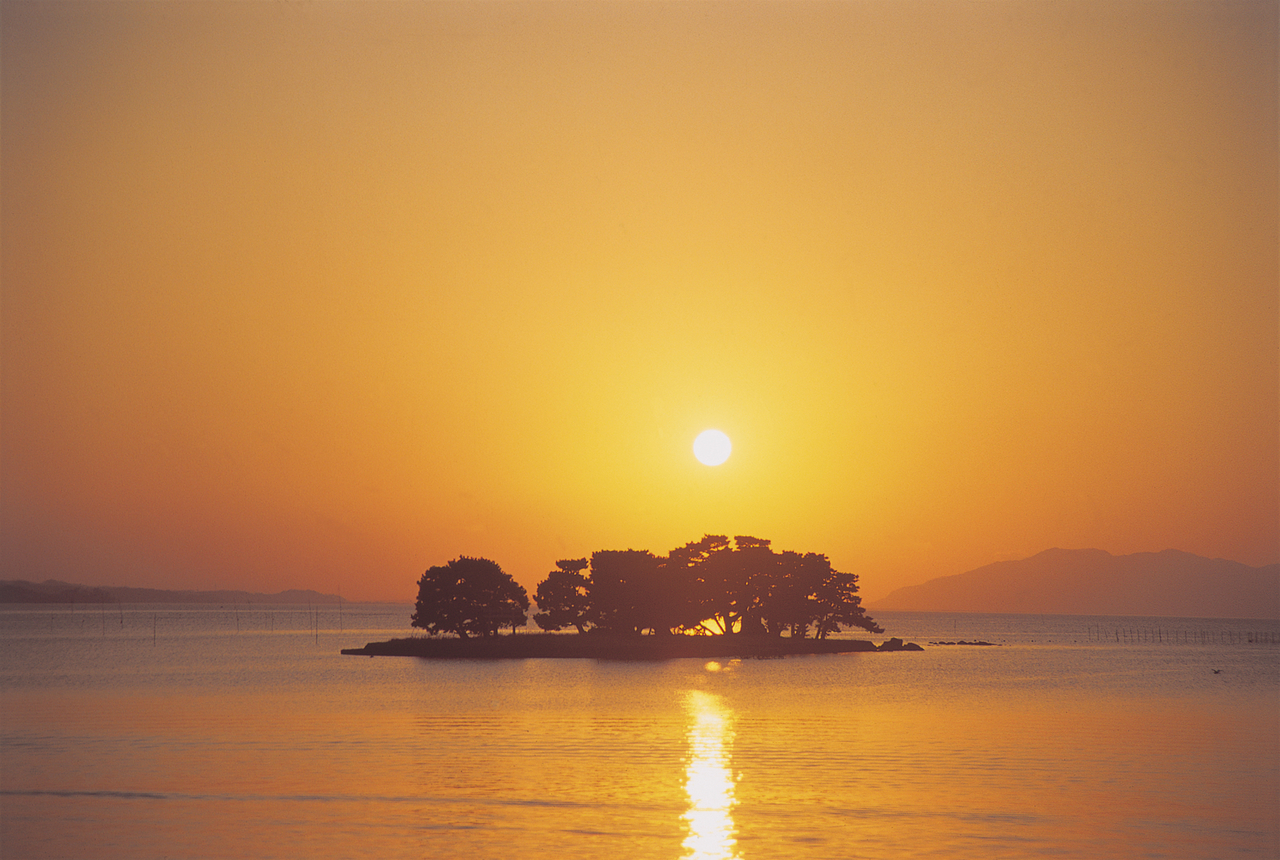
Lake Shinji © Shimane Prefecture Creative Commons Attribution 4.0 International License
Theme: To the Land of Myths! San’in Traverse Spiritual Trip
- Day 1: Limited Express “Yakumo” from Okayama Station to Matsue/Izumo → Sunset viewing at Lake Shinji → Stay in Tamatsukuri Onsen
- Day 2: Visit Izumo Taisha → Inasa no Hama Beach → Matsue Castle (National Treasure) and Horikawa Sightseeing Boat → Stay in Kaike Onsen or Yonago
- Day 3: Pass through Eshima Ohashi Bridge (Betabumi-zaka) to Sakaiminato (Mizuki Shigeru Road) → Gosho Aoyama Manga Factory (Detective Conan) → Stay in Misasa Onsen
- Day 4: Tottori Sand Dunes (Camel ride, Sand Museum) → Return from Tottori Sand Dunes Conan Airport or Tottori Airport
③ Nature Lovers Course (3 Days, 2 Nights)
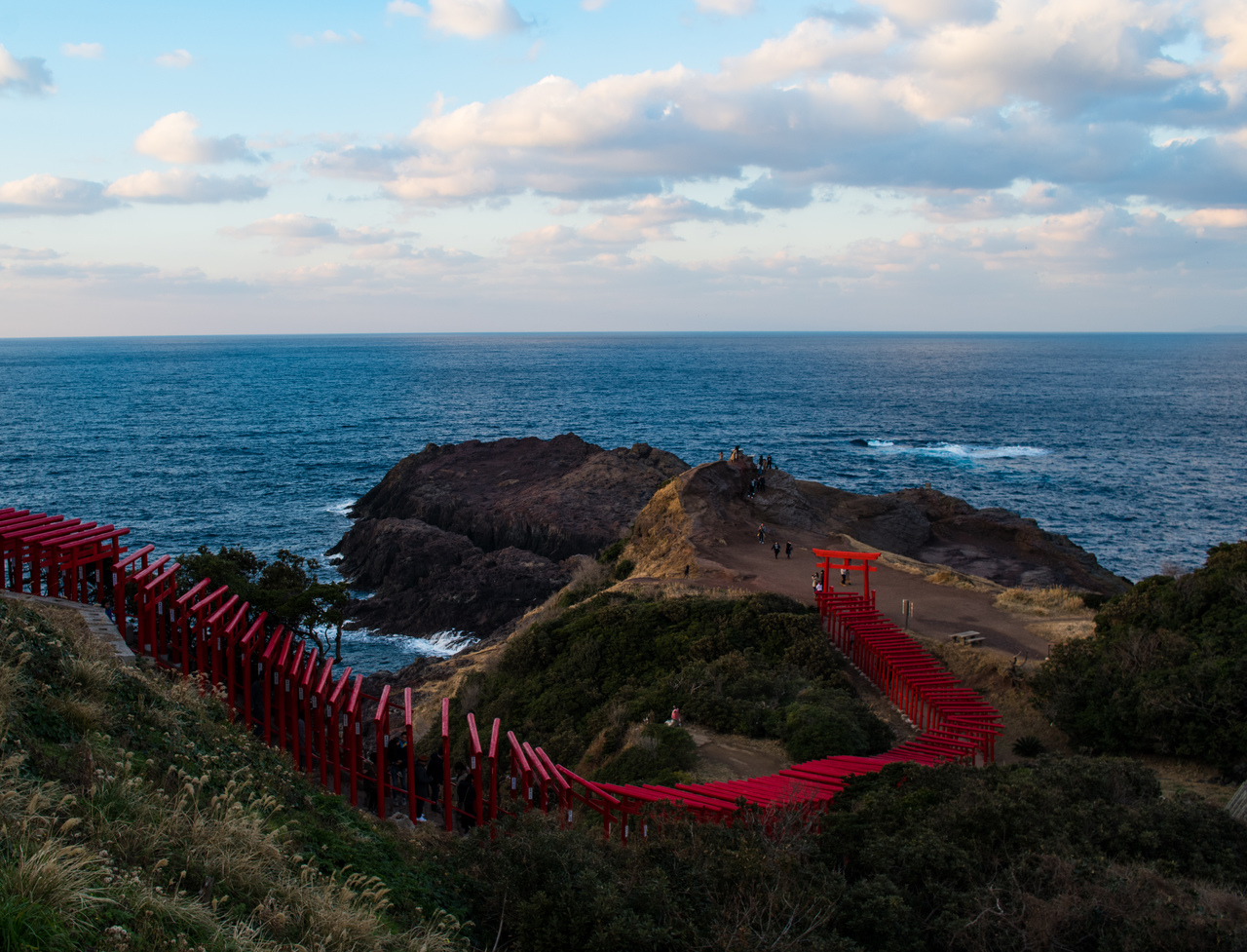
Motonosumi Inari Shrine © TsuruSho7 Creative Commons Attribution 4.0 International License
Theme: Spectacular View Hunter! Yamaguchi Tsunoshima Bridge & Motonosumi Shrine
- Day 1: Shin-Yamaguchi Station or Yamaguchi Ube Airport → Rental car to Akiyoshido/Akiyoshidai → Stay in Nagato Yumoto Onsen
- Day 2: Motonosumi Shrine (Red Torii and Blue Sea) → Tsunoshima Bridge (Bridge crossing the emerald green sea) → Move to Shimonoseki → Enjoy pufferfish and sushi at Karato Market → Stay in Shimonoseki
- Day 3: Mojiko Retro (Experience walking through Kanmon Tunnel to Kyushu is also possible) → Return from Shin-Shimonoseki Station or Kitakyushu Airport
④ Activity Experience Course (3 Days, 2 Nights)
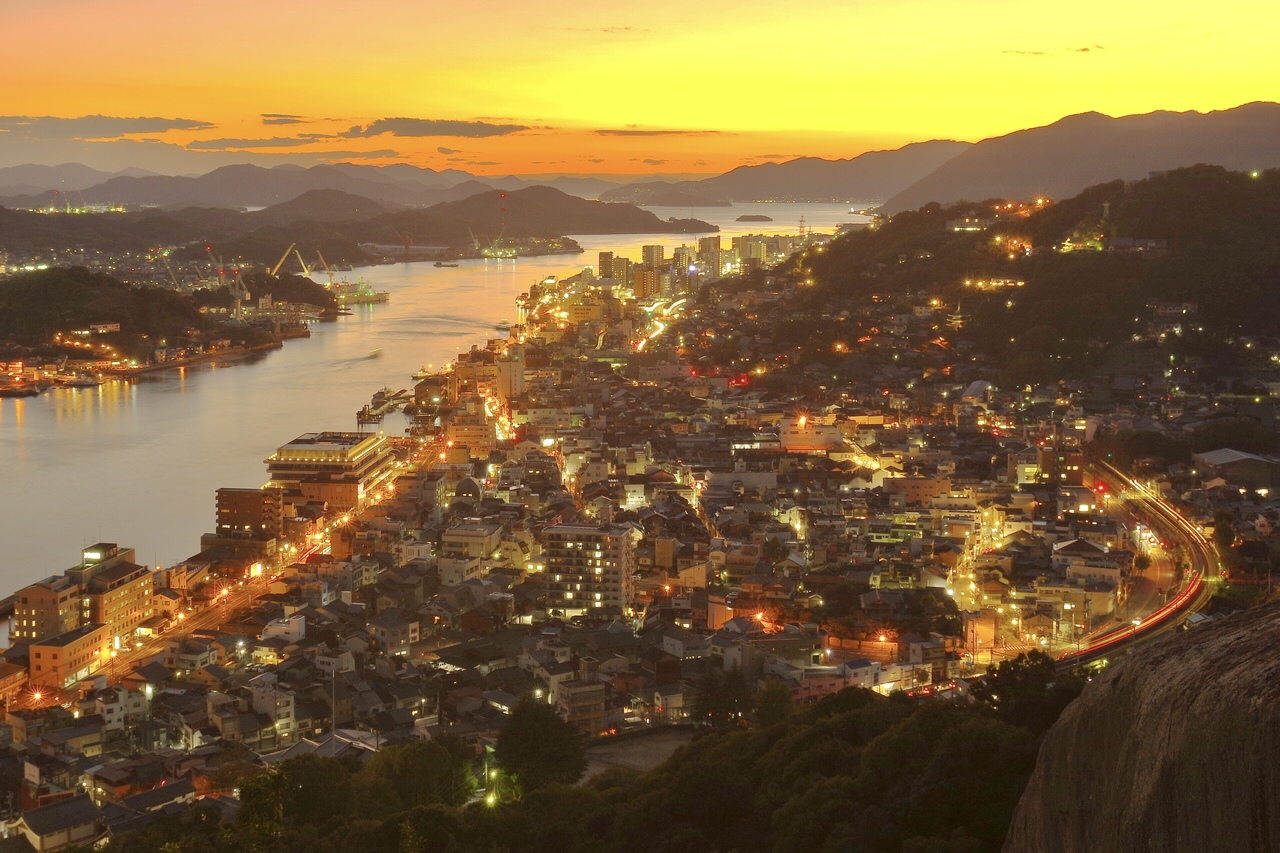
When lights turn on in the town of Onomichi © Masakazu_Murakami Creative Commons Attribution 4.0 International License
Theme: Cycling and Art! Shimanami Kaido and Onomichi
- Day 1: Hiroshima to Onomichi → Stroll the hilly town of Onomichi (Cat Alley, Senkoji Temple) → Onomichi Ramen → Stay in Onomichi
- Day 2: Shimanami Kaido Cycling (Touring islands by rental cycle, beginner courses available) → Ikuchijima (Kosanji Temple, The Hill of Hope) → Stay in Omishima or Imabari (Ehime Prefecture)
- Day 3: Extend to Dogo Onsen (Ehime) or return to Hiroshima by ferry and visit Kure (Yamato Museum) → Return from Hiroshima Airport
The Sanyo side (along the Shinkansen) has good transportation, but public transport is infrequent for the San’in side and scenic spots in Yamaguchi Prefecture, so using a rental car drastically improves efficiency. If driving to San’in in winter (December to February), snow tires are essential.