Exploring Japan’s 9 Regions: A Comprehensive Guide to Highlights & Access
Hi, I’m Hiro, a nationally certified travel professional with 15+ years of experience. I design “Safe & Efficient” itineraries for first-time visitors to Japan to ensure a worry-free and productive journey.
(Check out my [About page] for more details.)
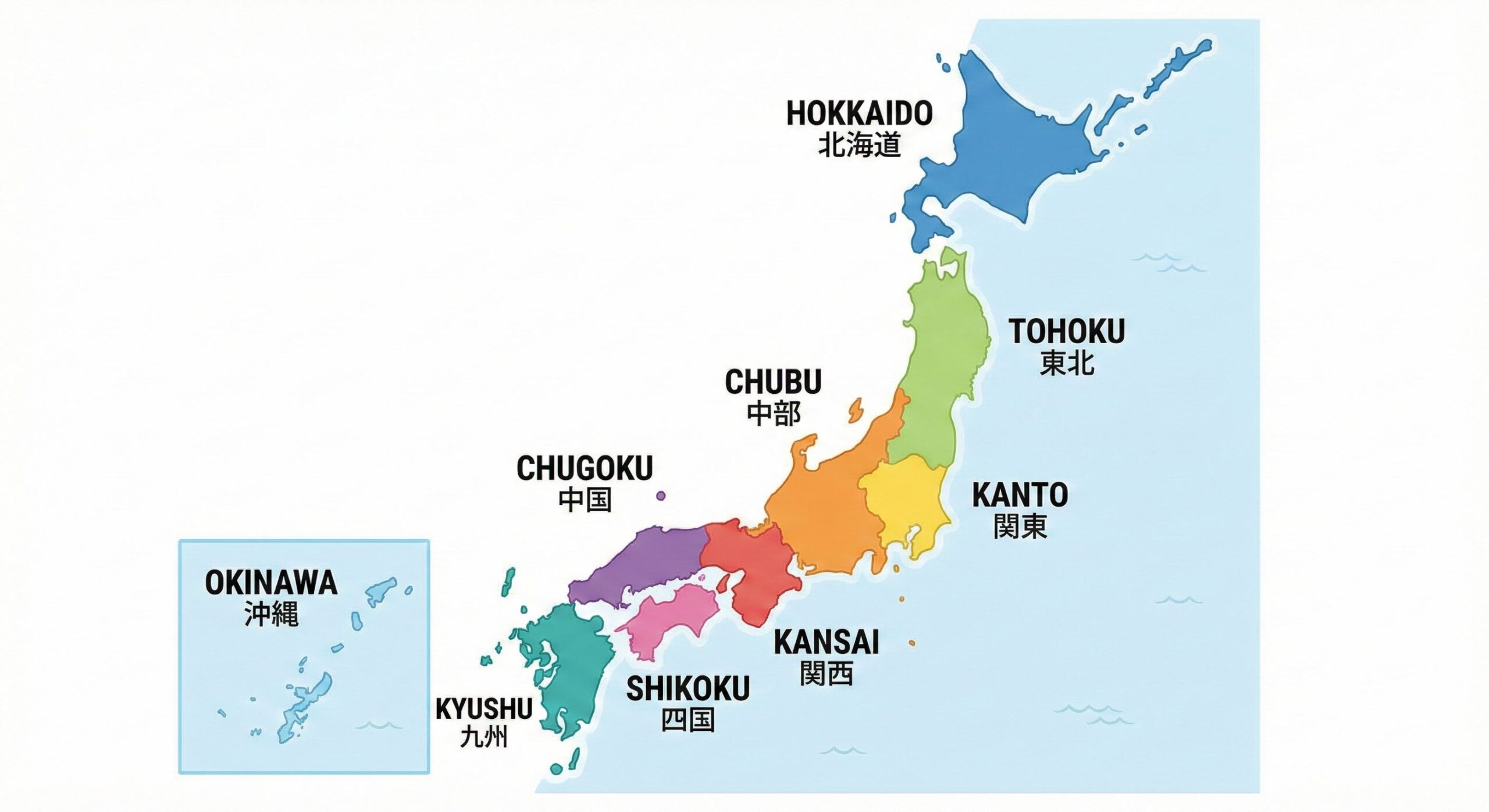
Welcome to “Japan Hotel & Onsen Guide”! Japan is a long archipelago stretching from north to south, with climate, culture, and attractions that vary significantly by region. As a first step, I have summarized the characteristics, major sightseeing spots, and access information for Japan’s nine regions. Let’s start by getting an overview to find the areas that interest you most.
*I have also included “Hiro’s Tips” for safe and efficient travel in each region.
1. Hokkaido
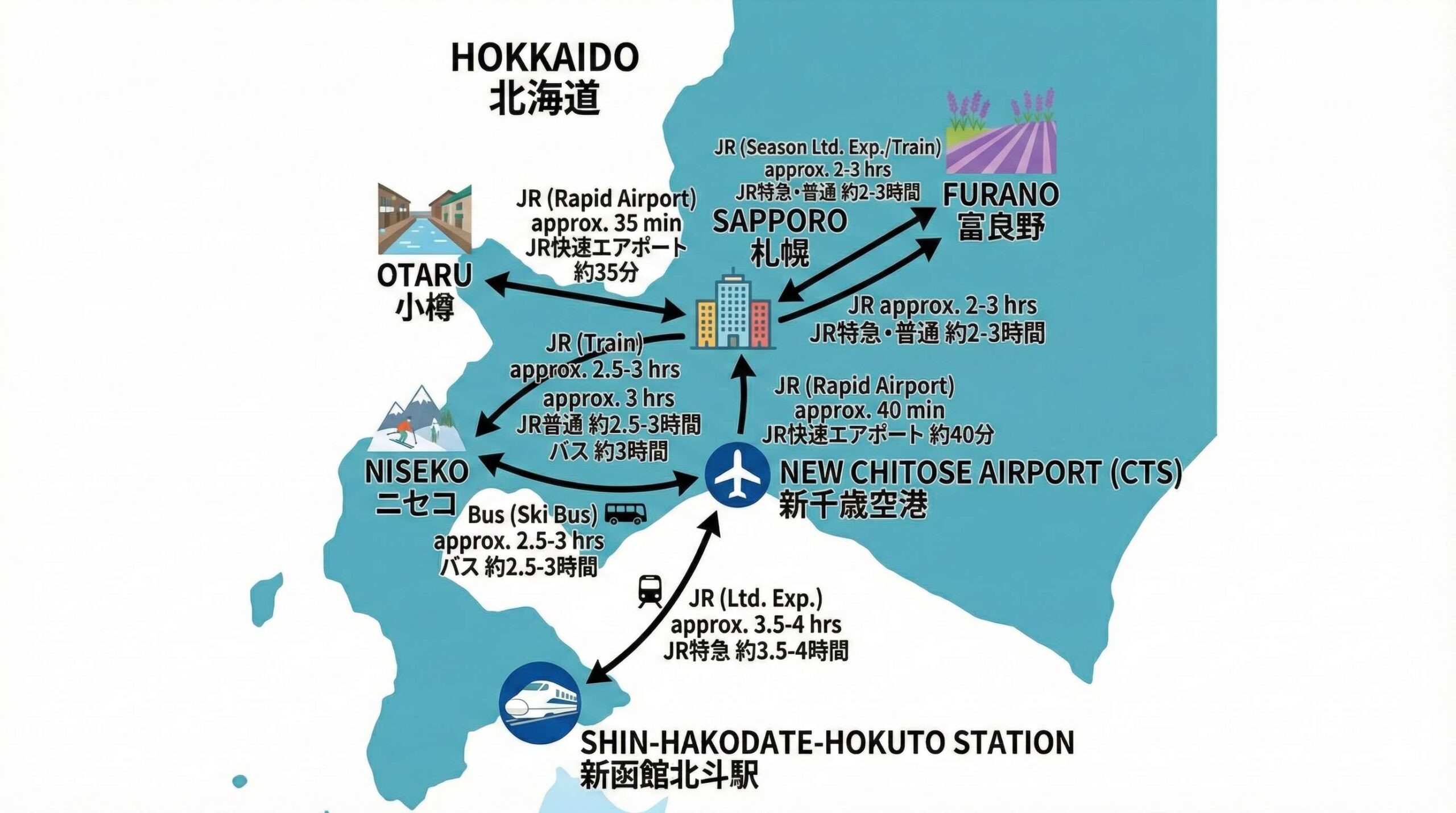
Located at the northernmost tip of Japan, Hokkaido is an area known for its vast nature and rich culinary scene. It offers cool summers with beautiful lavender fields and world-class powder snow in the winter.
- Major Sightseeing Spots: Sapporo, Otaru, Furano, Niseko
Access Information
- Major Airport: New Chitose Airport (CTS) – Nearest to Sapporo
- Major Shinkansen Station: Shin-Hakodate-Hokuto Station (Hokkaido Shinkansen)
2. Tohoku
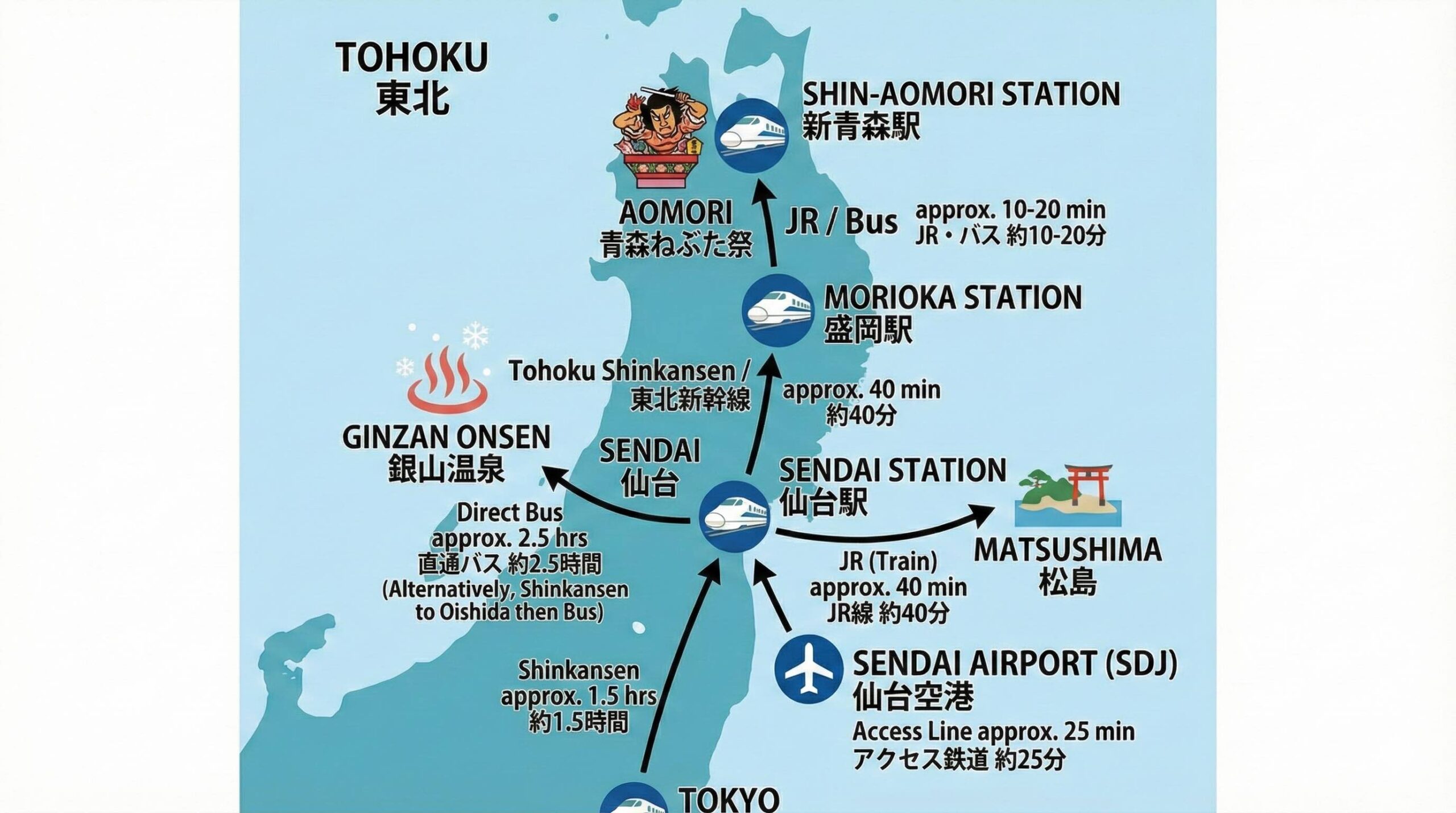
Located in the northern part of Honshu, Tohoku is characterized by beautiful four seasons, traditional festivals, and historic hot spring towns. Here, you can encounter the simple and warm original landscapes of Japan.
- Major Sightseeing Spots: Sendai, Matsushima, Ginzan Onsen, Aomori Nebuta Festival
Access Information
- Major Airport: Sendai Airport (SDJ)
- Major Shinkansen Stations: Sendai Station, Morioka Station, Shin-Aomori Station (Tohoku Shinkansen)
3. Kanto
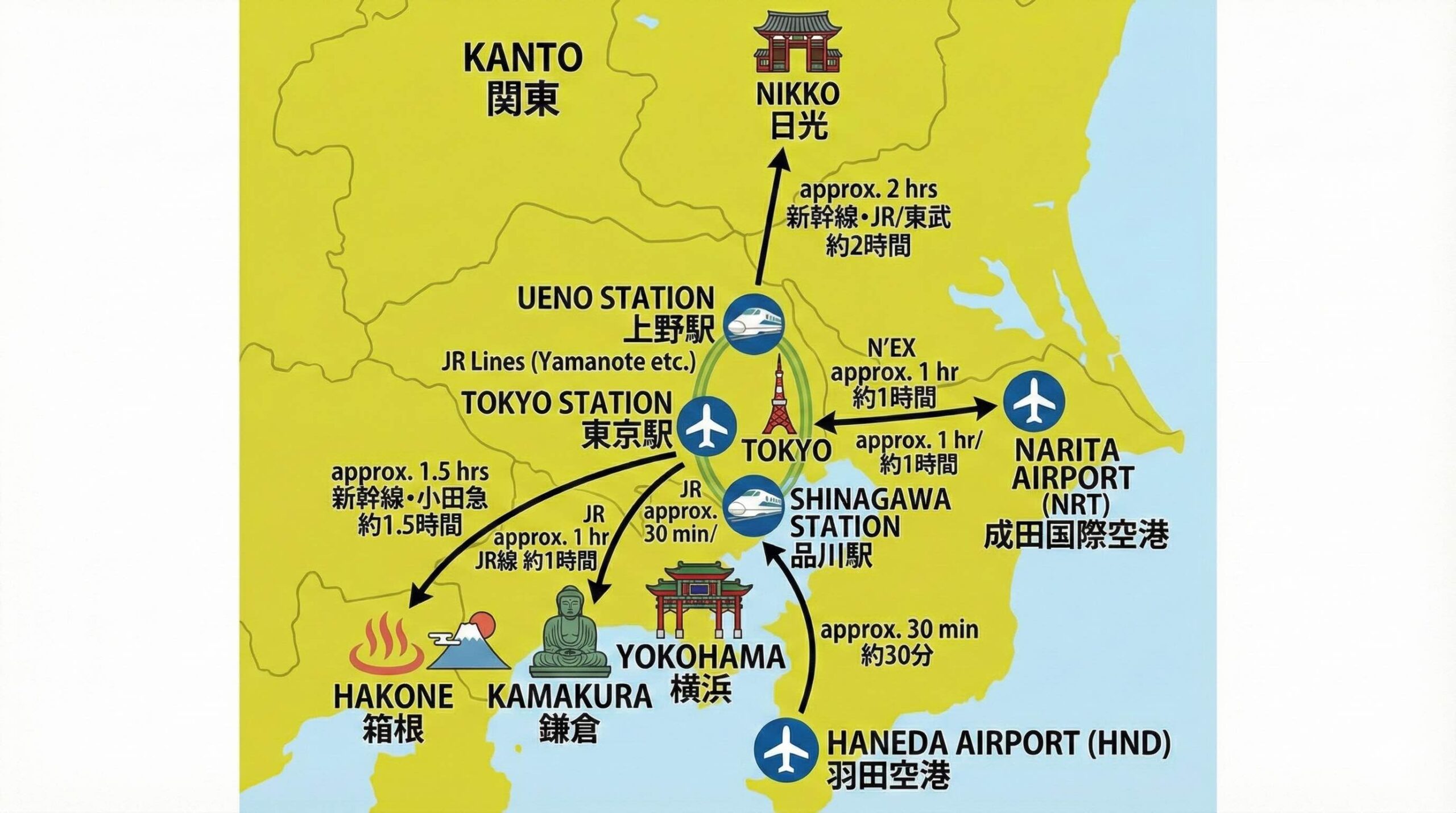
Kanto is the political, economic, and cultural heart of Japan, including the capital, Tokyo. It features a coexistence of cutting-edge urban functions and suburbs rich in nature and historical spots.
- Major Sightseeing Spots: Tokyo, Yokohama, Hakone, Nikko, Kamakura
Access Information
- Major Airports: Narita International Airport (NRT), Tokyo International Airport (Haneda Airport) (HND)
- Major Shinkansen Stations: Tokyo Station, Shinagawa Station, Ueno Station
4. Chubu
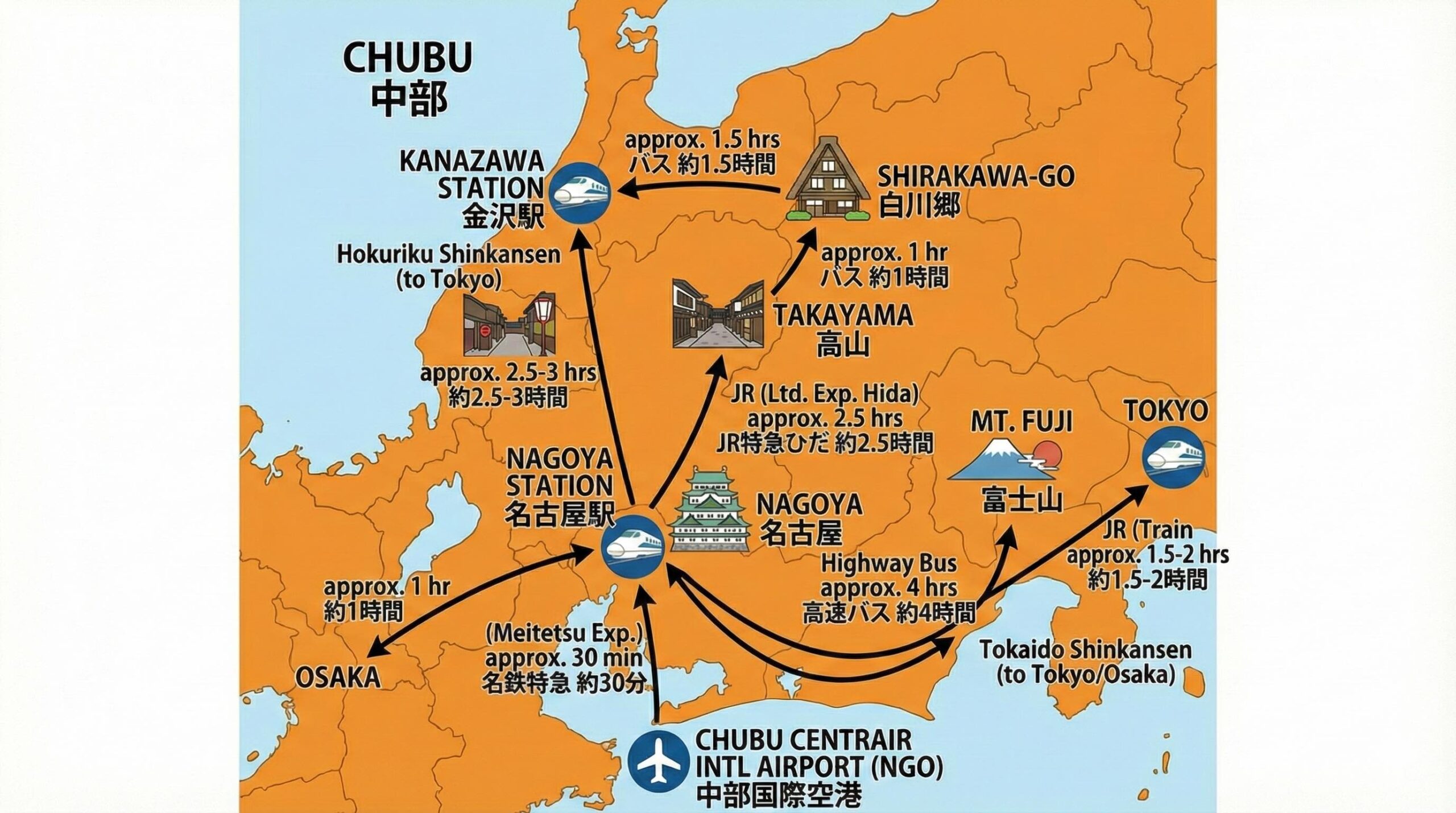
Located in the central part of Honshu, Chubu is a fusion of mountainous regions like the Japan Alps and coastal cultures along the Sea of Japan and the Pacific Ocean. Many historical streetscapes remain.
- Major Sightseeing Spots: Nagoya, Mt. Fuji, Shirakawa-go, Kanazawa, Takayama
Access Information
- Major Airport: Chubu Centrair International Airport (NGO)
- Major Shinkansen Stations: Nagoya Station (Tokaido Shinkansen), Kanazawa Station (Hokuriku Shinkansen)
5. Kansai
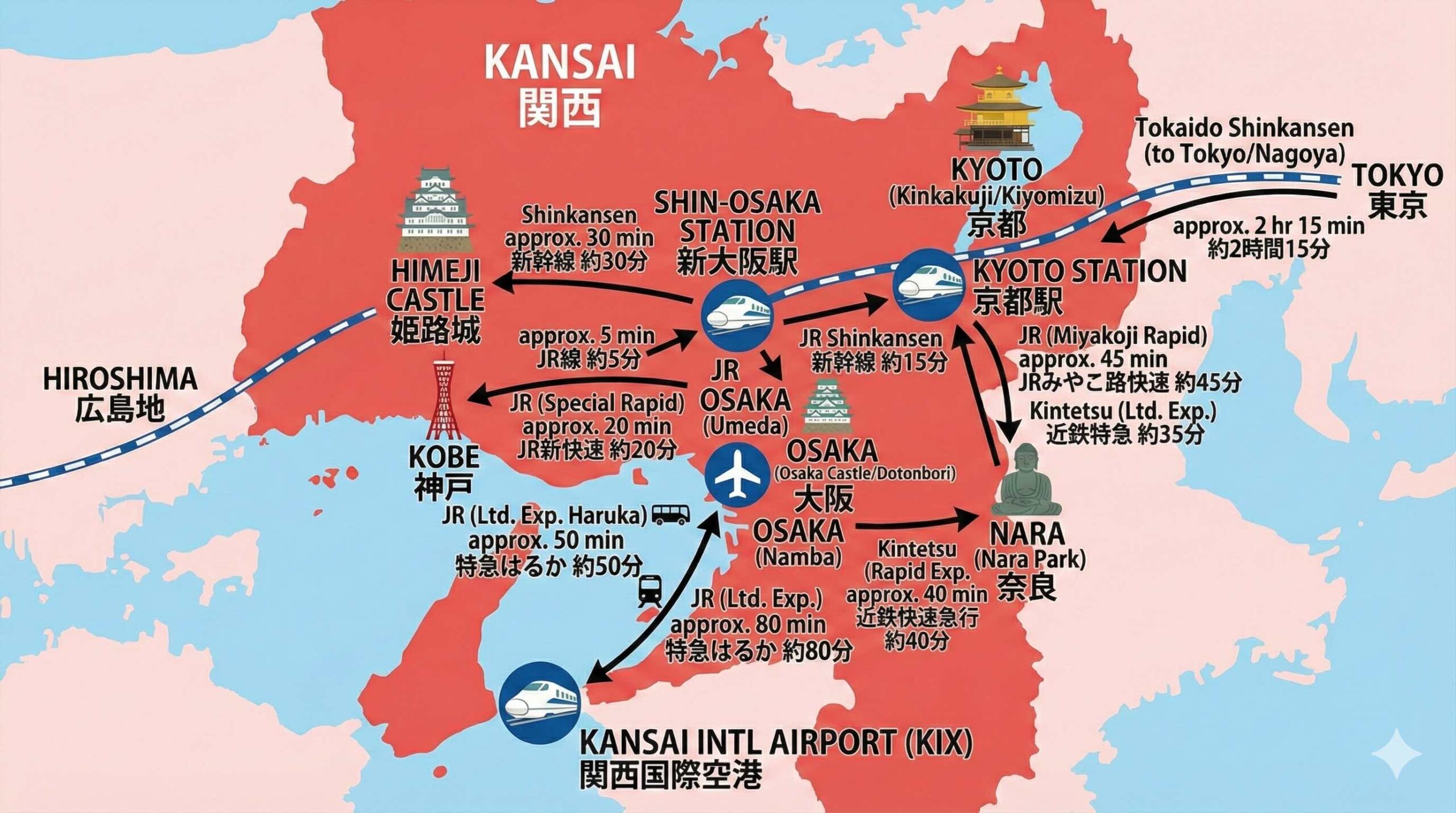
Kansai is the center of Japan’s history and traditional culture, featuring cities like Kyoto, Osaka, and Nara. You can enjoy both the atmosphere of ancient capitals and a vibrant food culture.
- Major Sightseeing Spots: Kyoto, Osaka, Nara, Kobe, Himeji Castle
Access Information
- Major Airport: Kansai International Airport (KIX)
- Major Shinkansen Stations: Shin-Osaka Station, Kyoto Station (Tokaido Shinkansen)
6. Chugoku
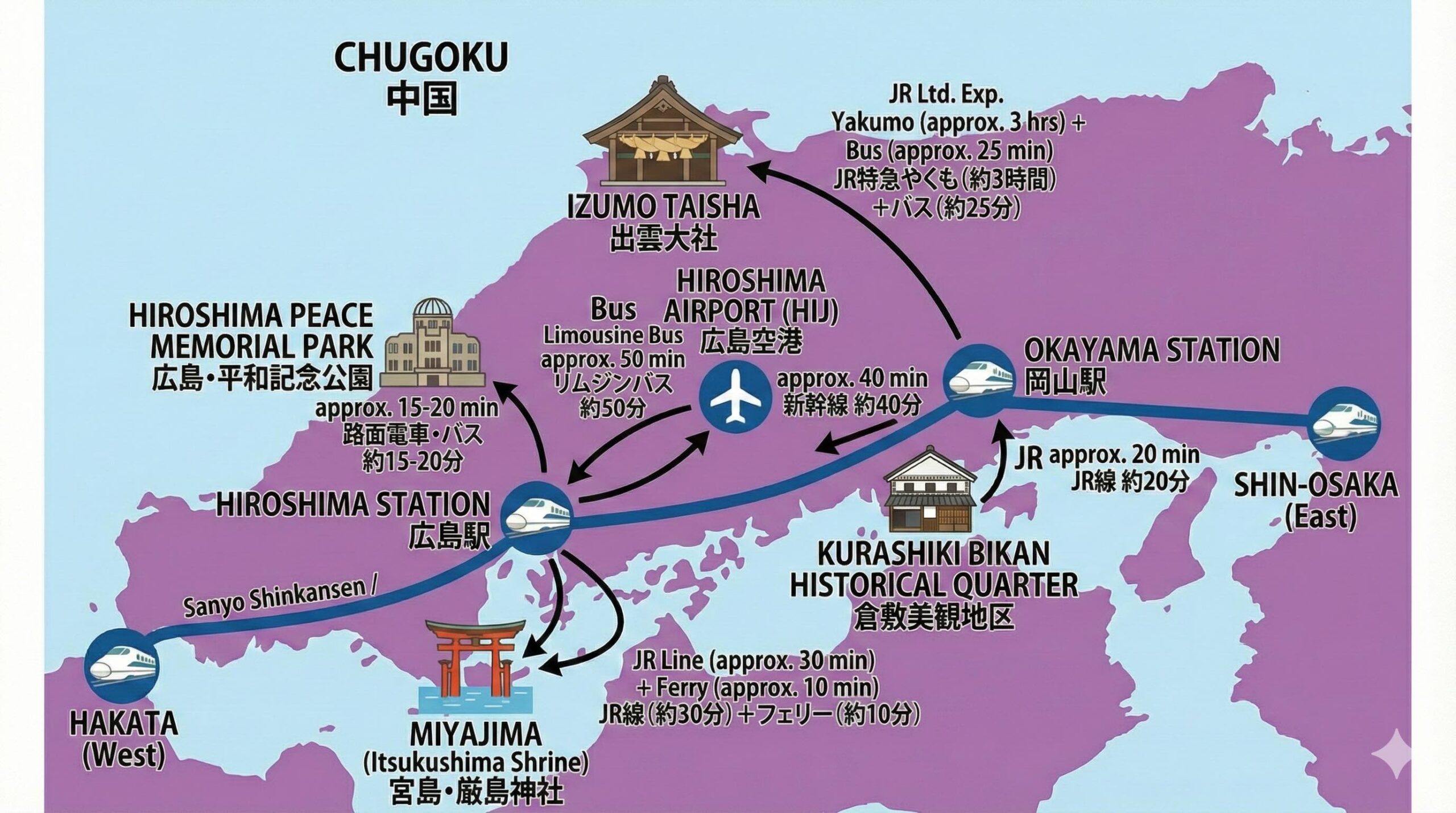
Located in western Honshu, Chugoku offers calm landscapes of the Seto Inland Sea and the rugged coastal beauty of the Sea of Japan. The area is home to many historically significant shrines and temples.
- Major Sightseeing Spots: Hiroshima Peace Memorial Park, Miyajima (Itsukushima Shrine), Izumo Taisha, Kurashiki Bikan Historical Quarter
Access Information
- Major Airport: Hiroshima Airport (HIJ)
- Major Shinkansen Stations: Hiroshima Station, Okayama Station (Sanyo Shinkansen)
7. Shikoku
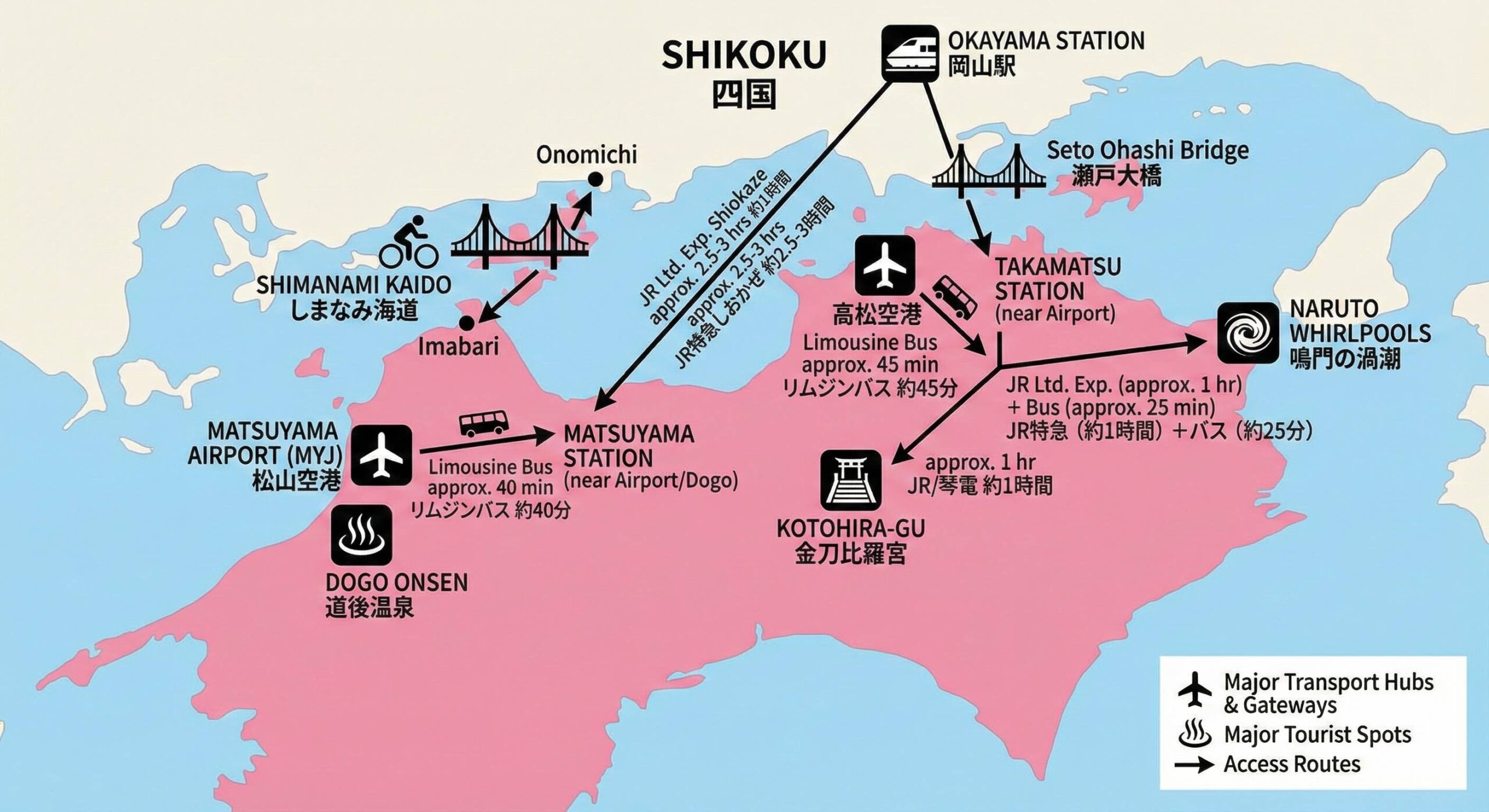
An island consisting of four prefectures, Shikoku is home to beautiful nature and unique cultures like the “Ohenro” pilgrimage tradition. Local dishes like Udon noodles are also very popular.
- Major Sightseeing Spots: Dogo Onsen, Kotohira-gu, Naruto Whirlpools, Shimanami Kaido
Access Information
- Major Airports: Matsuyama Airport (MYJ), Takamatsu Airport (TAK)
- Major Shinkansen Station: None (Access available from Okayama Station via JR Seto-Ohashi Line)
8. Kyushu
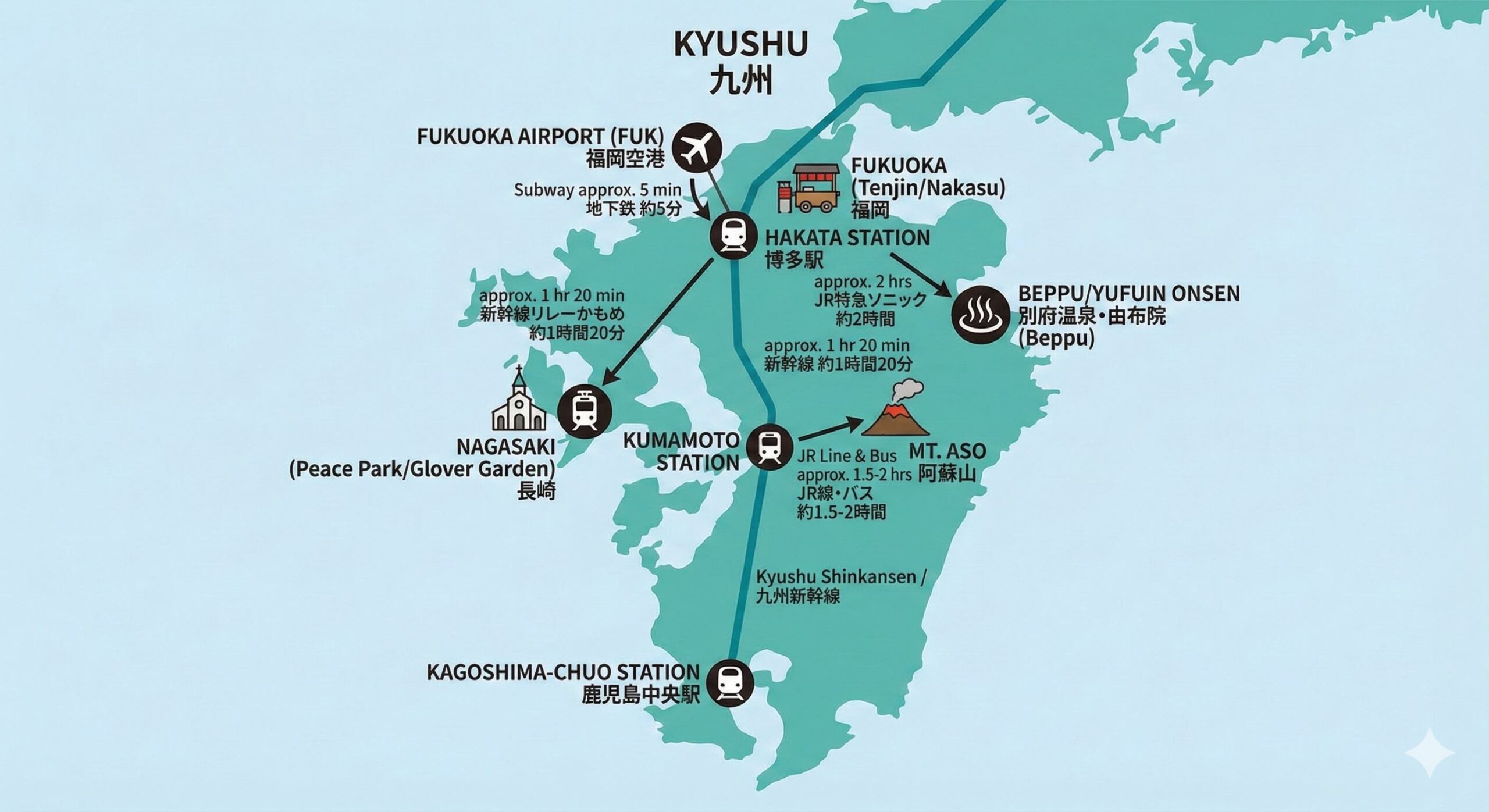
Located in the southwest of the Japanese archipelago, Kyushu is attractive for its abundant hot spring resources from active volcanoes, unique history, and rich food. It has a warm climate and is easy to spend time in.
- Major Sightseeing Spots: Fukuoka, Beppu/Yufuin Onsen, Nagasaki, Mt. Aso
Access Information
- Major Airport: Fukuoka Airport (FUK) – Excellent access to the city center
- Major Shinkansen Stations: Hakata Station, Kagoshima-Chuo Station (Kyushu Shinkansen)
9. Okinawa
Okinawa consists of islands at the southernmost tip of Japan, characterized by beautiful beaches due to the subtropical climate, unique Ryukyu culture, and a relaxed flow of time.
- Major Sightseeing Spots: Naha Kokusai Dori, Churaumi Aquarium, Shurijo Castle Park, remote islands like Ishigaki and Miyako
Access Information
- Major Airport: Naha Airport (OKA)
- Major Shinkansen Station: None
Summary
In this guide, we have covered the basic characteristics and access information for Japan’s nine regions. Japan has completely different faces depending on the area.
In the future, I plan to delve deeper into each region, introducing recommended hotels, hot springs, and specific model itineraries. Stay tuned!