
A Japanese “Onsen” (hot spring) is more than just a bath. It is a special experience to heal your body and mind and feel Japanese culture.
If it’s your first time entering an Onsen, you might be anxious: “Do I really have to be naked?” “What if I have a tattoo?” But don’t worry. As long as you know the basic manners, anyone can enjoy Onsen with peace of mind.
This guide explains the flow from before bathing to after bathing, step-by-step.
1. Onsen Basics: Why are there rules?
Japanese Onsen have “unspoken rules” to ensure everyone can use them comfortably. The background is the spirit of consideration: “Do not dirty the water” and “Do not bother others.”
Difference between Onsen and Sento
- Onsen (Hot Spring): Uses natural spring water and is mainly for relaxation and healing.
- Sento (Public Bath): Uses artificially heated water and serves as a daily “bath” for the local community.
The basic manners are the same for both, but Onsen Ryokans (Inns) offer a more relaxed atmosphere.
Why do we enter naked?
In Japan, there is a phrase “Naked Association” (Hadaka no Tsukiai). It is believed that by soaking in hot water without wearing anything, you can remove barriers between hearts and interact equally. Therefore, wearing swimsuits is basically prohibited (except for some specific spa facilities).
2. [Practical Guide] Step-by-Step Onsen Procedure
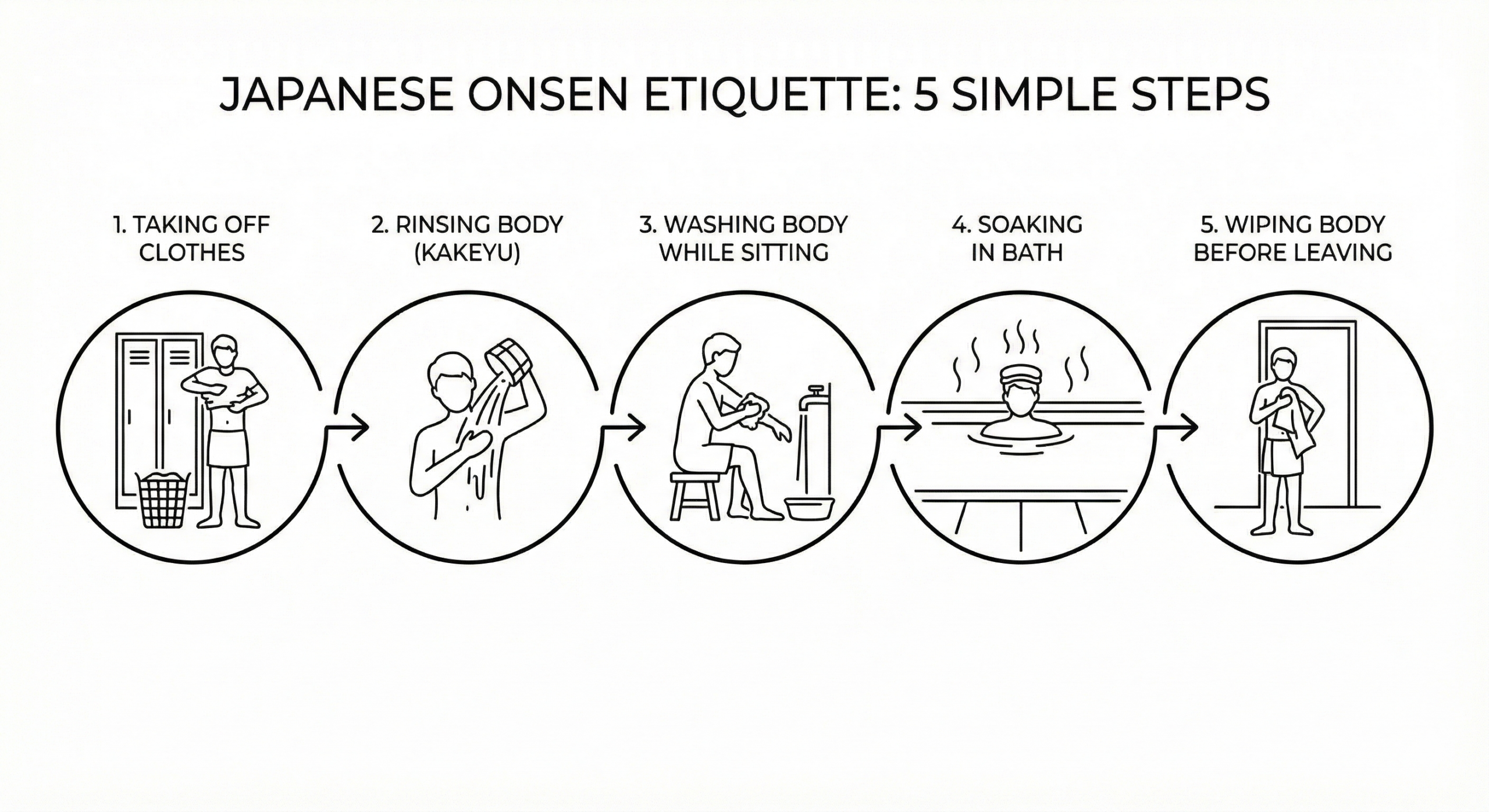
Here is the flow from arriving at the Onsen facility to leaving.
Step 1: Entrance
When you enter the facility, take off your shoes first. Put your shoes in the designated locker or shoe box. If there are slippers, change into them, but remember to take off slippers on Tatami mats.
Step 2: Changing Room
Take off all your clothes here.
- Strictly NO Smartphones or Cameras! To protect privacy, photography inside the changing room is absolutely prohibited.
- Put valuables in a locker with a key.
- It is smart to go to the toilet before bathing.
- Fold your clothes neatly and put them in the basket.
Step 3: Washing Area
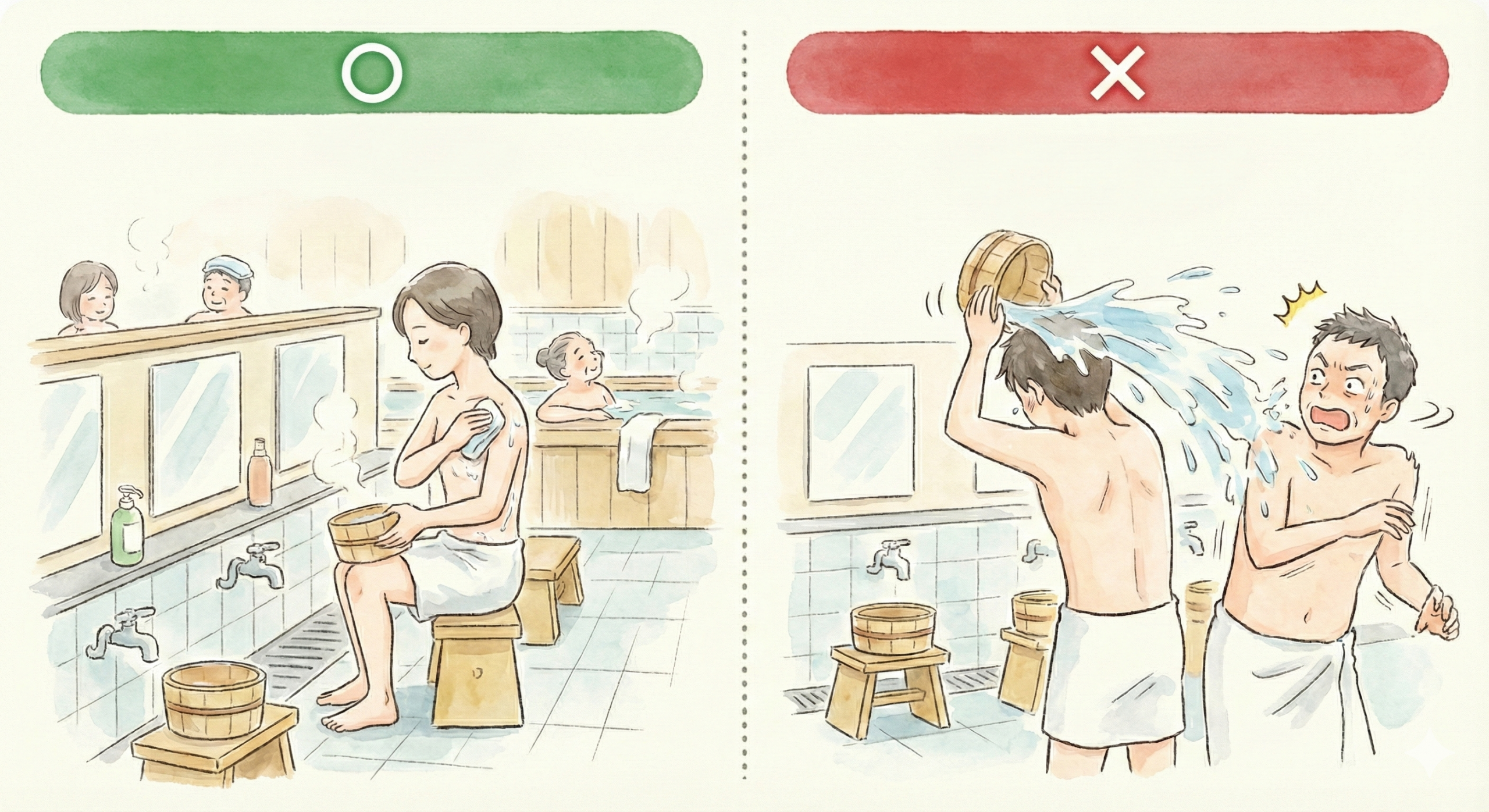
Do not enter the bathtub suddenly. First, clean your body.
- Kake-yu (Rinsing): Pour hot water over your feet and shoulders to rinse off sweat and get your body used to the temperature.
- Sit down to wash: Japanese showers are basically used while sitting. If you stand and shower, water will splash on people around you.
- Rinse the washbasin (bucket) and chair you used with hot water and return them to their original positions.
Step 4: The Bath
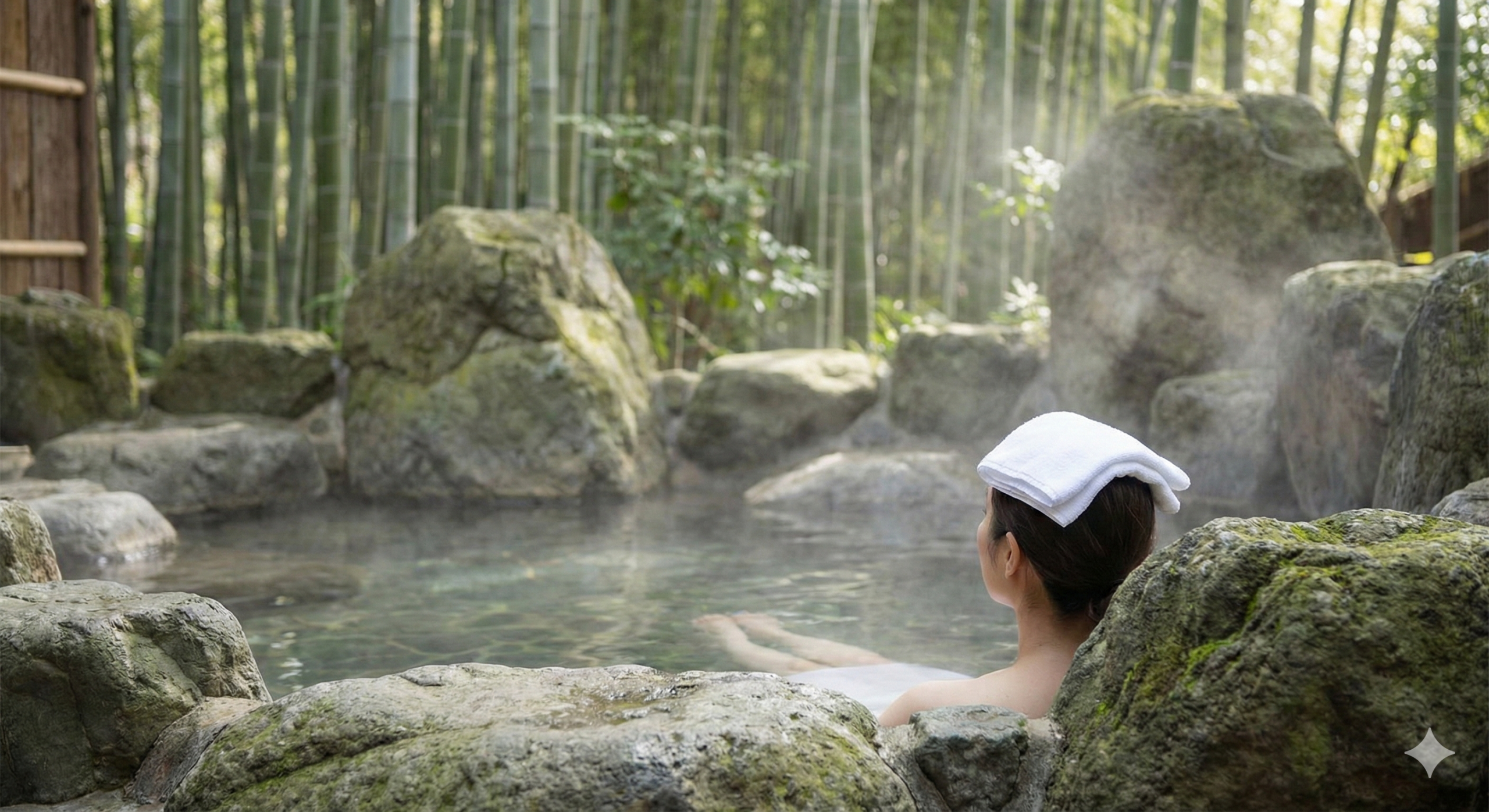
Once your body is clean, it’s time to bathe. Enter the hot water quietly.
- Do not put your towel in the water: For hygiene reasons, do not soak your towel in the bath. Place it on your head or on the edge of the tub.
- No swimming or diving: An Onsen is not a swimming pool. It is a place to relax quietly.
- Keep hair out of the water: If you have long hair, tie it up with a hair tie or clip so it doesn’t soak in the water.
Step 5: Finishing Up
There are important manners when leaving the Onsen as well.
- Wipe your body before returning to the changing room: This is one of the most important manners. If you go to the changing room while wet, the floor will get wet and cause others to slip or feel uncomfortable. Lightly wipe off water with your small towel before leaving the washing area.
3. Must-Know “Prohibitions & Taboos”
To avoid trouble, please absolutely avoid the following.
- Bathing after drinking alcohol: It is very dangerous as blood pressure may change suddenly. Save the alcohol for after the bath.
- Washing your body in the bathtub: Soap and shampoo should only be used in the washing area.
- Laundry: Washing underwear etc. in the washing area is a violation of manners.
- Exposing Tattoos: At many public Onsens, you may be refused entry if you have tattoos.
💡 What if I have a tattoo?
There are ways to enjoy Onsen even if you have tattoos.
- Use a Private Onsen (Kashikiri-buro): If it’s a private bath for just family or couples, tattoos are no problem.
- Use Tattoo Cover Stickers: More facilities are allowing entry if you cover small tattoos with designated skin-colored stickers.
- Find “Tattoo-Friendly” Facilities: In areas with many international tourists, there are Sentos and Onsens that allow tattoos. Please check in advance.
4. Ryokan Etiquette (Yukata & Slippers)
If you stay at an Onsen Ryokan, knowing specific manners will put you at ease.
How to wear Yukata
Wear the Yukata with the left side over the right. Be careful, as wearing the right side over the left is how the deceased are dressed for funerals.
(Easy way to remember: You should be able to slip your right hand inside the chest area easily.)
Slippers Rule
You can move around the facility in slippers, but always take off your slippers on Tatami mats.
Also, there are special slippers for the toilet. Don’t forget to change back to the room slippers when leaving the toilet.
5. Useful Japanese Phrases
Kanji and phrases useful at Onsen.
| Kanji | Reading (Romaji) | Meaning |
|---|---|---|
| 男湯 | Otoko-yu | Men’s Bath |
| 女湯 | Onna-yu | Women’s Bath |
| 露天風呂 | Roten-buro | Open-air Bath |
| 貸切風呂 | Kashikiri-buro | Private Rental Bath |
| 足湯 | Ashi-yu | Foot Bath |
Summary
Japanese Onsen manners might seem strict at first glance, but the basic principle is simply “consideration for the next person.”
Enter after cleaning your body, don’t dirty the water, and don’t wet the changing room. If you follow these, you can comfortably share the hot water with locals and have a wonderful Japanese cultural experience.
Please enjoy the Japanese Onsen that warms both your body and soul!